
Snoring in children is not always considered normal. Especially if snoring occurs almost every night, the child sleeps with their mouth open, or their breathing appears to pause occasionally during sleep, the underlying cause should be evaluated. Enlarged adenoids are a common cause of snoring in children, but they are not the only possible cause.
Enlarged tonsils, allergic rhinitis, chronic nasal congestion, and certain anatomical characteristics may also affect breathing at night. Even after adenoid surgery, snoring is not expected to disappear completely on the first night. It may continue for some time due to swelling and nasal congestion during recovery.
Therefore, both the actual cause of snoring before surgery and the course of recovery afterward should be evaluated together.
- Is Snoring Normal in Children?
- The Difference Between Temporary and Persistent Snoring
- Does Sleeping with an Open Mouth and Snoring Always Mean Enlarged Adenoids?
- Enlarged Adenoids (Adenoid Hypertrophy)
- Enlarged Tonsils
- Allergic Rhinitis and Nasal Congestion
- Deviated Nasal Septum, Reflux, and Weight
- What Are the Symptoms of Enlarged Adenoids?
- Nighttime Symptoms: Snoring, Sleep Apnea, and Sweating
- Daytime Symptoms: Mouth Breathing, Ear Infections, and Difficulty Concentrating
- How Are Enlarged Adenoids Diagnosed?
- Physical Examination, Lateral X-Ray, and Endoscopy
- When Is a Sleep Study (Polysomnography) Necessary?
- Does Snoring Stop Immediately After Adenoid Surgery?
- Temporary Snoring and Swelling During the First Few Days
- Typical Timeline for Snoring to Improve
- Why Snoring May Continue After Surgery
- Nonsurgical Treatment Options: Nasal Sprays and Allergy Treatment
- Which Symptoms Require Urgent ENT Evaluation?
- Frequently Asked Questions
- References
Is Snoring Normal in Children?
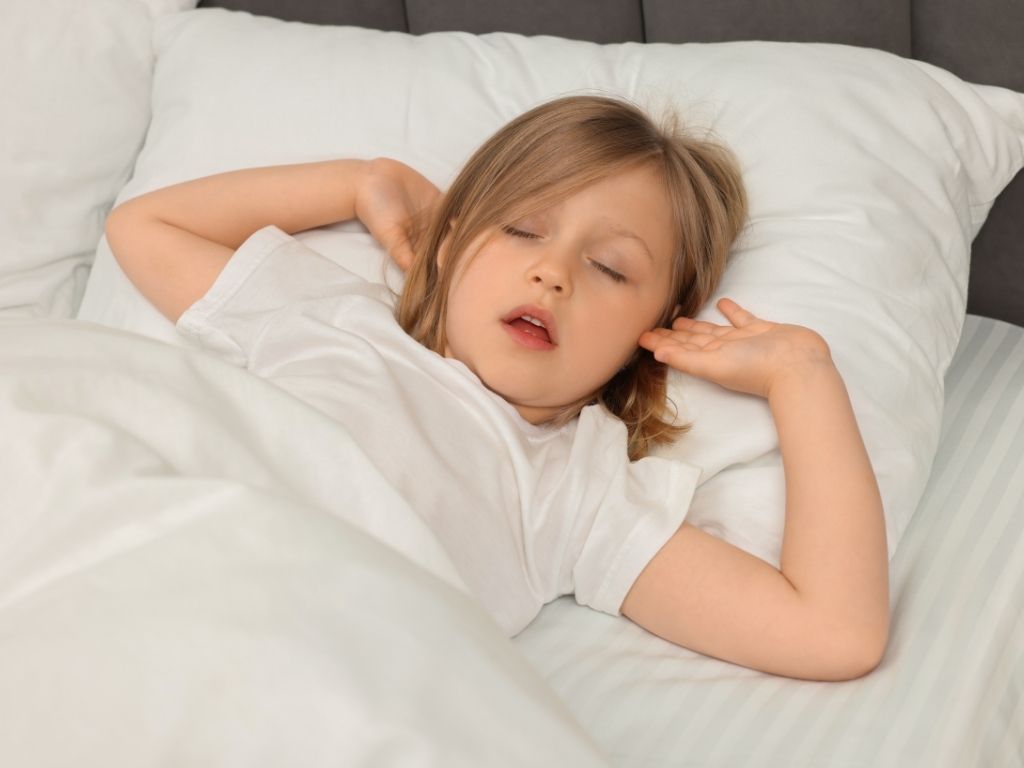
Occasional snoring can occur in children, but it should be evaluated if it becomes regular.
A child may snore for several nights when they have a cold, a blocked nose, or an upper respiratory tract infection. If the snoring disappears after the infection resolves, it is often a temporary condition.
However, if a child snores on most nights of the week, snores loudly enough to be heard outside the room, or appears to struggle to breathe during sleep, the situation should not be dismissed as ordinary childhood snoring.
Snoring alone does not necessarily indicate sleep apnea. However, it may be one of the most commonly noticed symptoms of the condition.
The Difference Between Temporary and Persistent Snoring
Temporary snoring is usually associated with short-term nasal congestion.
Snoring lasting a few days may occur in the following situations:
- Common cold
- Runny nose
- Upper respiratory tract infection
- Temporary swelling inside the nose
- Seasonal allergy flare-up
Persistent snoring, on the other hand, may continue for weeks or months.
In such cases, enlarged adenoids, enlarged tonsils, allergic rhinitis, chronic nasal congestion, or other conditions that narrow the airway during sleep may be investigated.
One of the most important distinctions for parents is whether snoring occurs only when the child is ill or continues even when the child is otherwise healthy.
Does Sleeping with an Open Mouth and Snoring Always Mean Enlarged Adenoids?
No. Sleeping with an open mouth does not necessarily mean that a child has enlarged adenoids.
Mouth breathing during sleep often occurs when the child cannot breathe comfortably through the nose. Enlarged adenoids are an important cause of this obstruction, but they should not be considered the only possible explanation.
Enlarged Adenoids (Adenoid Hypertrophy)
The adenoids are lymphoid tissue located at the back of the nose. Enlargement of this tissue is medically known as adenoid hypertrophy.
Enlarged adenoids can create a mechanical obstruction to airflow through the nose. As a result, the child may begin breathing through the mouth, particularly at night.
The following symptoms may occur with enlarged adenoids:
- Snoring
- Sleeping with the mouth open
- Persistent nasal congestion
- Nasal-sounding speech
- Restless sleep
- Recurrent ear problems
Some children may have significantly enlarged adenoids but experience only limited symptoms. In others, even moderate enlargement may substantially affect the airway.
Therefore, the child's symptoms are considered alongside the size of the adenoids.
Enlarged Tonsils
Snoring is not always caused by the adenoids. Enlarged tonsils can also narrow the airway at the level of the throat.
During sleep, muscle relaxation may cause the airway to narrow further. This can lead to snoring, restless sleep, and sleep apnea in some children.
Enlarged adenoids and tonsils frequently occur together. Therefore, both the back of the nose and the throat should be evaluated.
Allergic Rhinitis and Nasal Congestion
Allergic rhinitis is a common cause of sleeping with an open mouth in children.
When swelling occurs inside the nose, the child may be unable to breathe comfortably through it and may switch to mouth breathing throughout the night.
Allergic rhinitis is usually accompanied by the following symptoms:
- Sneezing
- Itching inside the nose
- Clear nasal discharge
- Nasal congestion
- Itchy or watery eyes
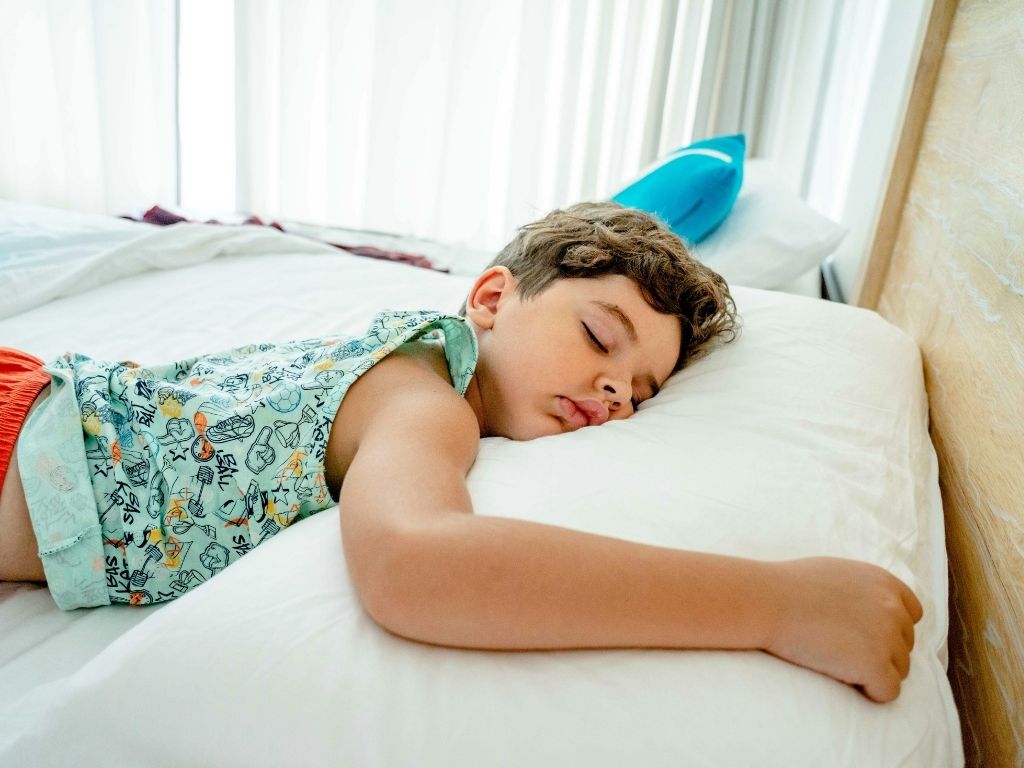
When allergy-related nasal obstruction is treated appropriately, snoring may decrease significantly in some children.
Deviated Nasal Septum, Reflux, and Weight
Although a deviated nasal septum is a less prominent cause in children than in adults, it may still affect airflow through the nose.
Reflux may contribute to irritation of the throat and upper airway in some children. However, reflux should not be assumed to be present in every child who snores.
Excess weight may also contribute to airway narrowing during sleep. Weight status may be included in the overall assessment, particularly in children with significant snoring or sleep apnea.
What Are the Symptoms of Enlarged Adenoids?
Symptoms of enlarged adenoids are not limited to nighttime snoring. Different signs may appear during the day and at night.
When trying to understand how adenoid enlargement affects children, parents may find it helpful to observe not only their child's sleep but also daytime behavior and ear problems.
Nighttime Symptoms: Snoring, Sleep Apnea, and Sweating
When enlarged adenoids narrow the airway at night, the following symptoms may occur:
- Persistent snoring
- Sleeping with the mouth open
- Breathing pauses during sleep
- Restless sleep
- Frequent changes in sleeping position
- Night sweats
- Sleeping with the head tilted backward
- Frequent awakenings
Sleep apnea in children involves more than snoring. Repeated narrowing or closure of the airway during sleep can cause breathing pauses and disrupt normal sleep patterns.
Sometimes the child resumes breathing without fully waking up. Therefore, parents may observe not only snoring but also the child's breathing pattern during sleep.
Daytime Symptoms: Mouth Breathing, Ear Infections, and Difficulty Concentrating
Enlarged adenoids may also cause symptoms during the day.
The child may:
- Breathe through the mouth throughout the day
- Have nasal-sounding speech
- Appear to have a constantly blocked nose
- Experience recurrent middle ear problems
- Show signs of reduced hearing
- Have difficulty waking up in the morning
- Feel tired or irritable during the day
Sleep disturbances in children do not always appear as daytime sleepiness, as they often do in adults.
Some children may experience difficulty concentrating, hyperactivity, irritability, or declining school performance.
Therefore, it is important to evaluate nighttime sleep problems together with daytime behavior.
How Are Enlarged Adenoids Diagnosed?
Enlarged adenoids cannot be diagnosed based solely on a description of snoring.
During an ENT evaluation, the duration of the child's symptoms, nighttime sleep, nasal breathing, tonsil size, and ear problems are considered together.
Physical Examination, Lateral X-Ray, and Endoscopy
During the examination, the nose, mouth, tonsils, and ears may be evaluated.
Because the adenoids are located at the back of the nose, they cannot be seen directly through the mouth. Different methods may be used when necessary.
A lateral X-ray may provide information about how much space the adenoids occupy in relation to the airway.
Endoscopy allows direct visualization of the adenoids at the back of the nose using a thin camera.
Not every child needs both an X-ray and endoscopy. The appropriate method is determined according to the child's age, examination findings, and symptoms.
When Is a Sleep Study (Polysomnography) Necessary?
Not every child who snores needs a sleep study.
A sleep study, called polysomnography, records the child's breathing, oxygen levels, sleep stages, and certain other parameters throughout the night.

A sleep study may be considered in the following situations:
- When the severity of snoring does not match the examination findings
- When the severity of sleep apnea needs to be determined
- When the child is overweight
- When the child has an accompanying heart, respiratory, or neurological condition
- When a more objective assessment is needed before deciding on surgery
The need for a sleep study is evaluated individually for each child.
Does Snoring Stop Immediately After Adenoid Surgery?
No. Snoring does not necessarily disappear completely immediately after adenoid surgery in every child.
During the first few days after surgery, tissue swelling, nasal congestion, and increased mucus production may occur. As a result, the child may continue breathing through the mouth and snoring for some time.
This alone does not mean that the surgery was unsuccessful.
Temporary Snoring and Swelling During the First Few Days
During the first few days after surgery, the following may occur:
- Nasal congestion
- Swelling
- Mouth breathing
- Throat sensitivity
- Increased mucus production
- Mild changes in voice
Even if surgery has created more space in the airway, snoring may continue because healing is not yet complete.
Therefore, the first few nights should not be considered representative of the final outcome.
Typical Timeline for Snoring to Improve
One of the questions parents frequently ask is how long it takes for snoring to stop after adenoid surgery.
It is not possible to specify a single day. The child's rate of recovery, the size of the adenoids, the condition of the tonsils, and any accompanying nasal congestion can affect the timeline.
Generally, snoring that continues during the first few days gradually decreases as swelling subsides and nasal breathing becomes easier. Many children show noticeable improvement within the first days and weeks.
The pattern of recovery over the first few weeks is more meaningful than the symptoms observed on the first night.
So, will a child's snoring go away?
If snoring is caused by enlarged adenoids and the obstruction has been successfully relieved, significant improvement is expected.
Why Snoring May Continue After Surgery
If snoring continues for a long time after adenoid surgery, there may be several possible reasons.
These include:
- Enlarged tonsils
- Allergic rhinitis
- Chronic nasal congestion
- Persistent postoperative swelling
- Regrowth of adenoid tissue over time
- Excess weight
- Problems related to nasal structure
- Other causes of sleep apnea
If snoring does not decrease after surgery or breathing pauses during sleep continue, a repeat ENT evaluation is appropriate.
Nonsurgical Treatment Options: Nasal Sprays and Allergy Treatment
Not every case of enlarged adenoids or snoring requires surgery.
Medical treatment options may be considered first, particularly in children with mild symptoms and accompanying allergy-related nasal congestion.
These options may include:
- Saline nasal rinses
- Nasal sprays when recommended by a physician
- Treatment of allergic rhinitis
- Measures to reduce exposure to indoor allergens
- Weight management in children who need it
- Evaluation of symptoms suggestive of reflux
Nasal sprays should not be expected to completely eliminate every case of adenoid enlargement. In some children, they may reduce swelling inside the nose, improve breathing, and relieve symptoms.
However, if the adenoids severely obstruct the airway and significant sleep apnea is present, medical treatment alone may not be sufficient.
Which Symptoms Require Urgent ENT Evaluation?
Not every case of snoring is an emergency. However, medical evaluation should not be delayed when certain breathing-related symptoms occur.
In particular, prompt medical assessment is necessary if the child experiences:
- Frequent or prolonged breathing pauses during sleep
- Bluish discoloration of the lips or face
- Significant difficulty breathing
- Chest retractions during breathing
- Waking from sleep gasping for air
- Severe difficulty eating or drinking
- Significant breathing difficulties that continue during the day
In other cases, a child who snores every night, constantly sleeps with their mouth open, or experiences significantly disrupted sleep may not require emergency care, but an ENT examination should not be postponed for an extended period.
Frequently Asked Questions
References
- Mitchell RB, et al. Clinical Practice Guideline: Tonsillectomy in Children (Update). Otolaryngol Head Neck Surg. 2019;160(1_suppl):S1–S42. (American Academy of Otolaryngology–Head and Neck Surgery Foundation)
Yasal Uyarı:
Her cerrahi veya girişimsel işlemde sonuçlar kişiden kişiye değişiklik gösterebilir. İşlem öncesinde hekiminizden detaylı görüş almanız önerilir.