
Salivary Gland Diseases
Salivary gland diseases include various conditions that affect saliva production, saliva flow, or the structure of the salivary glands....
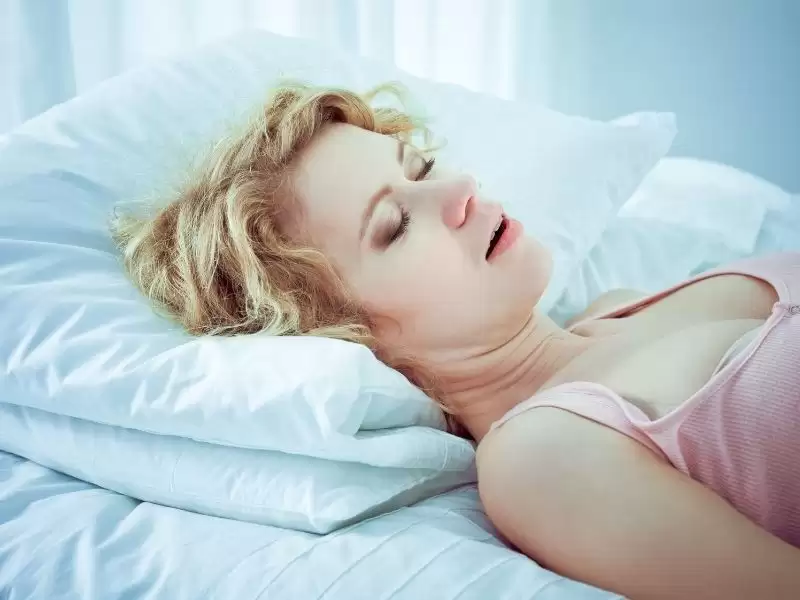
Sleep apnea is a sleep-related breathing disorder characterized by brief pauses or significant reductions in breathing during sleep. It is often recognized through symptoms such as snoring, pauses in breathing at night, waking with a choking sensation, morning fatigue, and daytime sleepiness. Sleep apnea can affect not only nighttime sleep but also daytime energy, attention levels, and quality of life.
Sleep apnea is the repeated interruption of breathing caused by narrowing or closure of the airway during sleep. The most common type is obstructive sleep apnea. Narrowing of the upper airway during sleep may restrict airflow and lead to this condition.
During pauses in breathing, blood oxygen levels may decrease, and the brain may trigger brief awakening responses. The person usually does not remember these awakenings; however, because sleep is repeatedly interrupted, they may wake up feeling unrefreshed. Therefore, people with sleep apnea may experience daytime fatigue even when they believe they have slept for a sufficient amount of time.
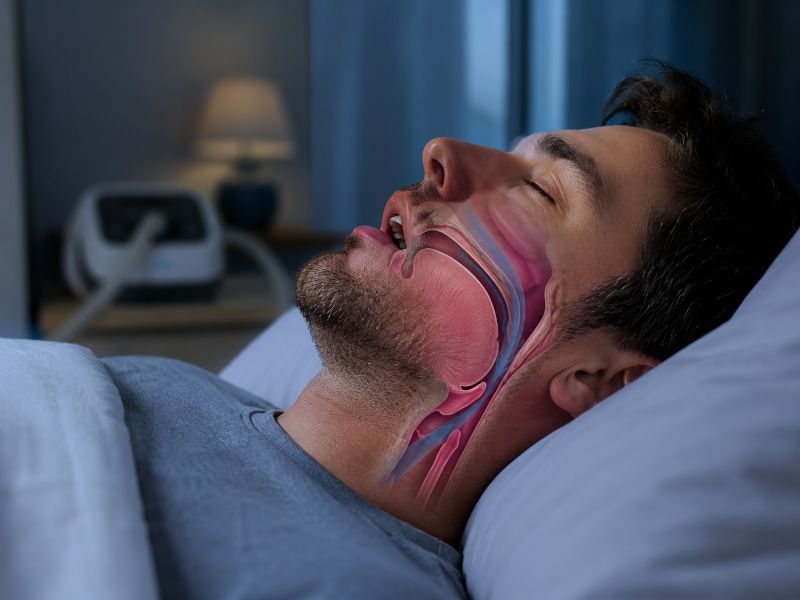
Sleep apnea symptoms may not appear in the same way in every patient. While snoring may be the most noticeable symptom in some people, daytime fatigue or difficulty concentrating may be more prominent in others.
Common symptoms include loud snoring, observed pauses in breathing during sleep, waking with a choking sensation or difficulty breathing, morning headaches, dry mouth, daytime sleepiness, difficulty concentrating, restless sleep, and waking up feeling unrefreshed.
Pauses in breathing at night, particularly when noticed by a spouse or family member, may be an important warning sign of sleep apnea. However, snoring alone does not always indicate sleep apnea; an evaluation is needed to distinguish between the two.
Sleep apnea may be associated with several factors that narrow the upper airway or make breathing more difficult during sleep. Excess weight, a large neck circumference, jaw structure, the size of the tongue base, sagging of the soft palate, enlarged tonsils, and enlarged adenoids may affect the airway.
From an ENT perspective, nasal congestion, septal deviation, turbinate enlargement, allergic rhinitis, or chronic sinusitis may also affect sleep quality. These conditions may not cause sleep apnea on their own; however, they can make nighttime breathing more difficult and increase complaints such as snoring and mouth breathing.
Snoring and sleep apnea may be related, but they are not the same condition. Snoring is the sound produced when air passing through the upper airway causes the soft tissues to vibrate during sleep. Sleep apnea, on the other hand, involves episodes in which breathing stops or becomes significantly reduced.
| Feature | Snoring | Sleep Apnea |
|---|---|---|
| Definition | Noisy breathing during sleep | Breathing stops or decreases during sleep |
| Symptoms | Loud snoring is the main symptom | Pauses in breathing, a choking sensation, and daytime sleepiness may occur |
| Risk | It may not always be serious | It should be evaluated in relation to heart health, blood pressure, and sleep quality |
| Diagnosis | It may be assessed through an examination | A sleep study may be required |
| Treatment | It is planned according to the underlying cause | An individualized treatment approach is required |
Persistent and loud snoring accompanied by pauses in breathing should be evaluated. An assessment for sleep apnea may be necessary, particularly when daytime sleepiness, morning headaches, or high blood pressure are also present.
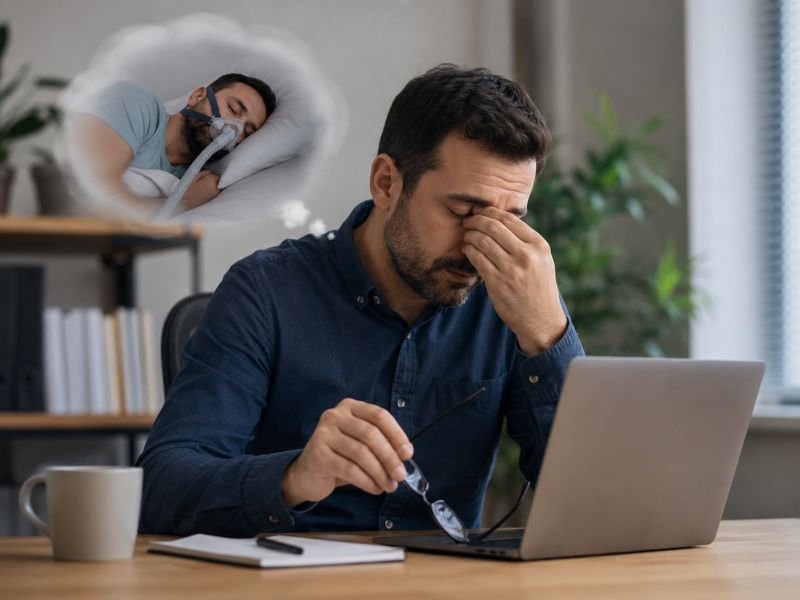
Sleep apnea may cause daytime fatigue because it can repeatedly interrupt sleep throughout the night. Even when a person sleeps for a long time, they may wake up feeling tired because they have not experienced high-quality, uninterrupted sleep.
Daytime sleepiness, reduced attention while driving, decreased work performance, forgetfulness, and irritability may be associated with sleep apnea. These symptoms should not be considered simply as tiredness. Particularly when accompanied by snoring and pauses in breathing at night, they should be evaluated as possible signs of a sleep-related breathing disorder.
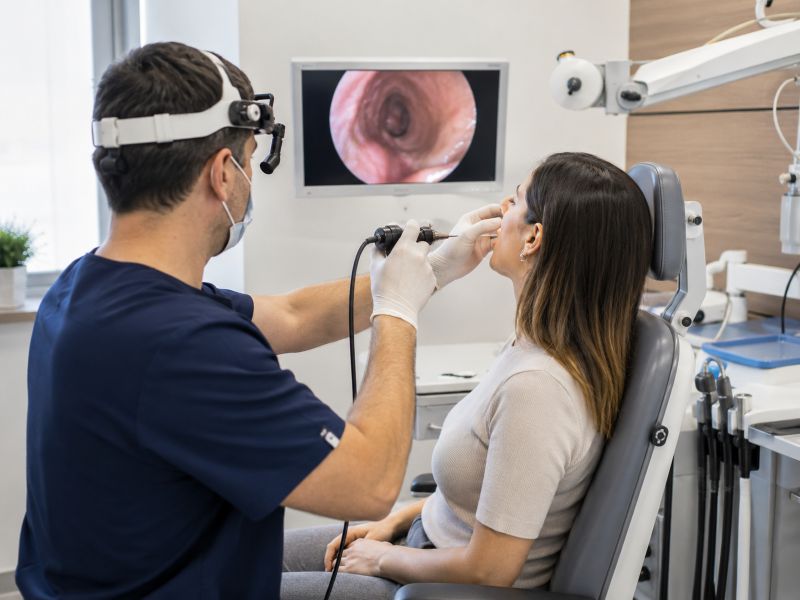
When making a sleep apnea diagnosis, the patient’s symptoms, sleep pattern, history of snoring, daytime symptoms, and accompanying health conditions are evaluated together. During an ENT examination, the nose, nasopharynx, soft palate, tonsils, tongue base, and upper airway structures may be examined.
One of the most important diagnostic methods is a sleep study. A sleep study, known as polysomnography, helps assess data such as breathing, oxygen levels, heart rhythm, and sleep stages during sleep. A home sleep study may also be considered for some patients; the appropriate method should be determined by a physician.
Sleep apnea treatment should be planned according to the severity of the condition, the location of airway narrowing, the patient’s weight, nasal congestion, accompanying health conditions, and sleep study results. The same treatment method is not applied to every patient.
Treatment options may include lifestyle changes, weight management, adjusting sleeping position, avoiding alcohol and sedatives, oral appliances, PAP or CPAP therapy, and surgical evaluation in suitable patients. CPAP therapy provides pressurized air support that helps keep the airway open during sleep. Device selection, pressure settings, and follow-up should be managed under a physician’s supervision.
An ENT evaluation is important for identifying upper airway problems that may contribute to sleep apnea. Nasal congestion, septal deviation, turbinate enlargement, enlarged tonsils, enlarged adenoids, or the structure of the soft palate may affect nighttime breathing.
This evaluation is performed not to identify a single cause of sleep apnea, but to understand additional factors that narrow the airway. This allows the treatment plan to be developed based not only on the sleep study results but also on the person’s anatomical structure and symptoms.
Sleep apnea does not require surgery in every patient. For mild symptoms, lifestyle changes, weight management, or changing sleeping position may be sufficient. CPAP therapy or other supportive treatments may be considered for moderate to severe sleep apnea.
Surgical evaluation may be performed, particularly in patients with significant nasal congestion, enlarged tonsils, enlarged adenoids, septal deviation, or airway narrowing associated with the soft palate. Whether surgery is necessary should be determined by evaluating the sleep study results, examination findings, and the patient’s general health condition together.
Sleep apnea is a sleep-related breathing disorder that should not be neglected. Snoring, pauses in breathing at night, morning fatigue, and daytime sleepiness are symptoms that should be evaluated. This content is intended for general informational purposes and does not replace a diagnosis or treatment plan. The appropriate approach to sleep apnea symptoms should be determined following an examination and evaluation by a physician.
Yasal Uyarı:
Her cerrahi veya girişimsel işlemde sonuçlar kişiden kişiye değişiklik gösterebilir. İşlem öncesinde hekiminizden detaylı görüş almanız önerilir.
Salivary gland diseases include various conditions that affect saliva production, saliva flow, or the structure of the salivary glands....
UPPP (Uvulopalatopharyngoplasty) is a surgical procedure considered in cases where snoring—and in some patients obstructive sleep apnea (OSA...

Snoring surgery refers to surgical treatment methods planned according to the area where airway narrowing causes snoring during sleep. Snori...