
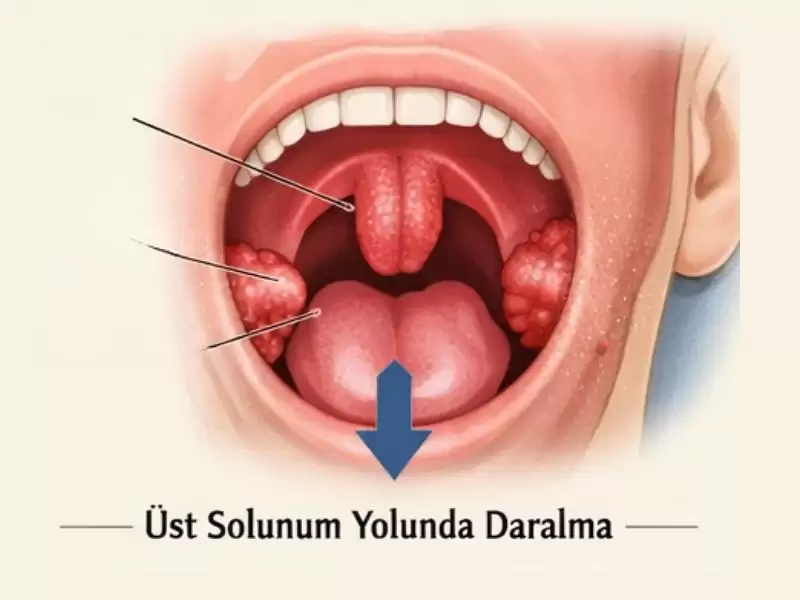
What Do Doctors Who Perform UPPP (Uvulopalatopharyngoplasty) Surgery Pay Attention To?
For doctors who perform UPPP surgery, the main approach is not to apply the same surgical procedure to every patient, but to accurately eval...

Hoarseness is a condition in which the voice sounds different from normal, becomes raspy, weak or deeper, or tires quickly while speaking. Short-term infections, excessive voice use, reflux, allergies or vocal cord disorders may cause this condition. A change in the voice may improve within a few days, but in some people it may persist longer and require an ENT evaluation.
The question what is hoarseness is important for people who experience a raspy or deeper voice or become tired while speaking. Hoarseness occurs when the vibration pattern of the vocal cords is disrupted. Normally, the vocal cords close and vibrate regularly during speech. The quality of the voice may change when the vocal cords develop swelling, irritation, nodules, polyps, infection or impaired movement.
Hoarseness is not a disease on its own, but a symptom that may develop due to different underlying causes. Therefore, not only the voice change itself but also its duration, accompanying sore throat, cough, reflux symptoms, smoking and professional voice use should be evaluated together.

Symptoms of hoarseness may vary from person to person. In some patients, the voice may be almost completely lost, while others may experience only a raspy voice or fatigue while speaking.
A deeper, higher-pitched or raspy voice, a feeling of strain in the throat while speaking, frequent throat clearing, weakening of the voice during the day, vocal fatigue after long conversations and a reduced vocal range while singing are among the common complaints.
Vocal fatigue may be more noticeable in teachers, call centre employees, performers, imams, lawyers and people whose work requires prolonged speaking. If hoarseness frequently recurs in these groups, vocal hygiene and an evaluation of the vocal cords become particularly important.
One of the most common answers to the question what causes hoarseness is laryngitis. Laryngitis is swelling of the vocal cords, most often associated with an upper respiratory tract infection, excessive voice use or irritating factors. In this situation, voice quality may temporarily deteriorate.
Prolonged use of the voice at a high volume, shouting, frequent throat clearing, cigarette smoke, allergic conditions, laryngopharyngeal reflux, vocal cord nodules, vocal cord polyps and certain neurological conditions may also cause hoarseness. In some patients, hoarseness may also be associated with previous surgery or conditions that affect vocal cord movement.
Hoarseness and a throat infection may occur together, but they do not mean the same thing. In a throat infection, the main complaint is usually a sore throat and difficulty swallowing. In hoarseness, the change in voice quality is more prominent.
| Feature | Hoarseness | Throat Infection |
|---|---|---|
| Main Complaint | Change in voice quality | Sore throat and difficulty swallowing |
| Duration | May be short- or long-lasting depending on the cause | Usually limited to the course of the infection |
| Accompanying Findings | Raspy voice, vocal fatigue and voice loss | Fever, fatigue and throat redness |
| Cause | Vocal cord problems, reflux, nodules, polyps or infection | Viral or bacterial infection |
| Evaluation | A vocal cord examination may be needed | Assessed with a throat examination |
This distinction is important for determining the correct treatment approach. If the voice change persists, it should not be assumed to be caused only by a throat infection.

The question can hoarseness be caused by reflux is especially important for people who have morning hoarseness and frequently need to clear their throat. Laryngopharyngeal reflux may contribute to hoarseness when stomach contents reach the throat and vocal cords. In this condition, heartburn may not always be noticeable.
Morning hoarseness, a sensation of something stuck in the throat, dry cough, frequent throat clearing and throat irritation may be associated with reflux-related hoarseness.
Lifestyle changes, dietary adjustments and, when necessary, medication may be considered for reflux-related hoarseness. The treatment plan should be determined according to the patient's symptoms and examination findings.
Vocal cord nodules and vocal cord polyps can cause hoarseness by affecting the way the vocal cords close and vibrate. Nodules are generally associated with prolonged vocal strain, while polyps may sometimes appear as a one-sided vocal cord lesion.
In these conditions, a person may tire quickly while speaking and may have difficulty making the voice higher-pitched or louder. Treatment may include voice rest, voice therapy, reflux management or, in some patients, surgical evaluation.
To establish a diagnosis of hoarseness, the duration of the symptoms, the patient's occupation, smoking history, reflux symptoms, history of infection and voice-use habits are assessed. During an ENT examination, the throat and larynx are evaluated.
A vocal cord examination is an important step in understanding the cause of hoarseness. Endoscopic methods can be used to assess the structure, movement and closure of the vocal cords and to determine whether nodules, polyps, swelling or another lesion are present.
Hoarseness treatment should be planned according to the underlying cause. For short-term hoarseness associated with an infection, avoiding vocal strain, drinking enough fluids and staying away from factors that may irritate the throat can be supportive. If reflux, allergies or incorrect voice use are present, treatment is adjusted according to these causes.
Voice therapy may be considered for vocal cord nodules or functional voice disorders. Different treatment options may be considered for polyps, cysts or vocal cord movement problems. The same method is not used for every patient; the treatment plan should be determined according to examination findings.

Persistent hoarseness, especially when it lasts longer than 3-4 weeks, may require an ENT evaluation. Earlier assessment is recommended if there is a history of smoking, difficulty swallowing, shortness of breath, blood-stained sputum, swelling in the neck, unexplained weight loss or a progressively worsening voice change.
Although hoarseness often develops due to temporary causes, direct visualisation of the vocal cords is important when it persists. This content is intended for general information and does not replace diagnosis or a treatment plan. The appropriate approach to hoarseness symptoms should be determined following an examination and medical assessment.
Yasal Uyarı:
Her cerrahi veya girişimsel işlemde sonuçlar kişiden kişiye değişiklik gösterebilir. İşlem öncesinde hekiminizden detaylı görüş almanız önerilir.
For doctors who perform UPPP surgery, the main approach is not to apply the same surgical procedure to every patient, but to accurately eval...

Snoring surgery refers to surgical treatment methods planned according to the area where airway narrowing causes snoring during sleep. Snori...

Salivary gland diseases include various conditions that affect saliva production, saliva flow, or the structure of the salivary glands....