
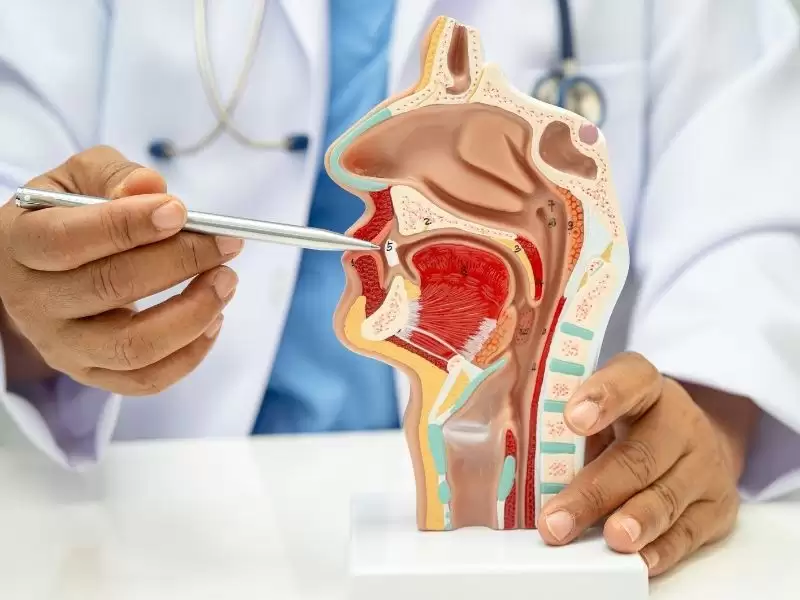
What Is Tonsillectomy and Adenoidectomy?
One of the most commonly performed surgical procedures in the field of Ear, Nose, and Throat (ENT) is tonsillectomy and adenoidectomy. These...

Salivary gland diseases include various conditions that affect saliva production, saliva flow, or the structure of the salivary glands. The salivary glands help keep the mouth moist, make swallowing easier, prepare food for digestion, and support oral health. When stones, infections, inflammation, blockages, masses, or reduced secretion develop in these glands, various symptoms may occur under the jaw, in front of the ear, or inside the mouth.
The question what are salivary gland diseases is important for people who experience swelling under the jaw, in front of the ear, or inside the mouth. Salivary gland diseases are conditions that affect the function or duct structure of the glands that secrete saliva into the mouth. The main major salivary glands are the parotid gland located in front of the ear, the submandibular gland located under the jaw, and the sublingual gland located under the tongue. There are also many minor salivary glands inside the mouth.
When saliva production decreases, a duct becomes blocked, or an infection develops in the gland tissue, symptoms such as swelling, pain, dry mouth, or a bad taste may occur. Since every salivary gland swelling does not have the same cause, the duration of the complaint, its relationship with meals, and accompanying findings should be evaluated together.
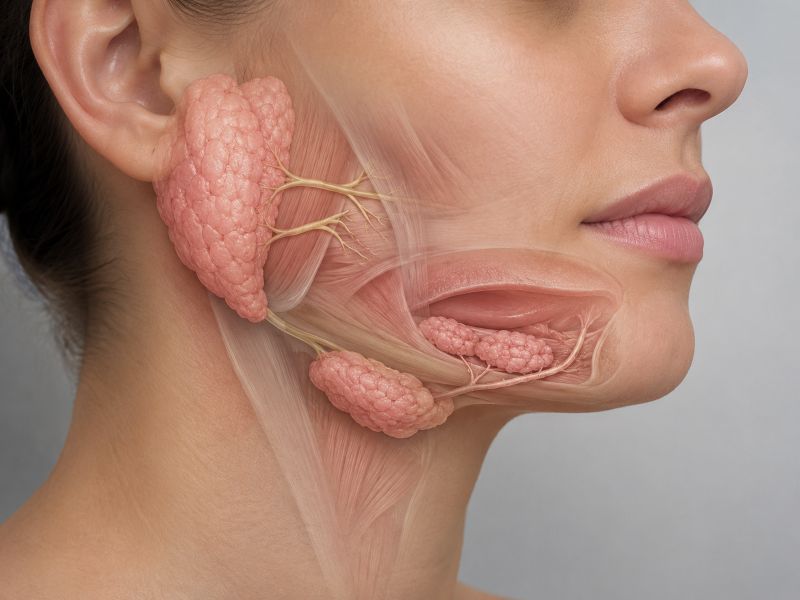
Symptoms of salivary gland diseases may vary depending on the affected gland and the underlying cause. Salivary gland swelling may be noticed as fullness under the jaw, in front of the ear, in the cheek, or on the floor of the mouth. In some patients, the swelling is mild, while in others it may be accompanied by pain, redness, tenderness, and difficulty opening the mouth.
Pain and swelling under the jaw or in front of the ear while eating may suggest impaired saliva flow. Dry mouth, a bad taste, discharge into the mouth, fever, fatigue, discomfort while chewing, and difficulty swallowing are also among the symptoms that may be seen in salivary gland diseases.
Causes of salivary gland diseases may include salivary gland stones, infections, narrowing of the ducts, conditions that cause dry mouth, reduced fluid intake, certain medications, immune system-related diseases, and salivary gland masses.
A salivary gland stone may block the salivary duct and prevent saliva from flowing easily into the mouth. In this case, pressure builds up inside the gland, and swelling or pain may become more noticeable, especially during meals. Reduced saliva flow or accumulation within the duct may also increase the risk of infection.
Salivary gland stones and infections may cause similar symptoms; however, the way they develop and their treatment approaches may differ. Stones are more commonly associated with duct obstruction, while infection is associated with inflammation in the gland tissue.
| Feature | Salivary Gland Stone | Salivary Gland Infection |
|---|---|---|
| Main Symptom | Swelling and pain during meals | Pain, tenderness, and swelling |
| Onset | May be recurrent | May develop more suddenly |
| Accompanying Findings | Reduced saliva flow | Fever, redness, and fatigue may occur |
| Affected Area | Glands under the jaw or in front of the ear | Salivary glands and surrounding tissues |
| Evaluation | Examination and imaging may be required | Examination and signs of infection are evaluated |
This distinction cannot always be made based on symptoms alone. Examination and, when necessary, imaging methods help support the diagnostic process.

Salivary gland swelling may occur due to stones, infections, duct obstruction, inflammatory diseases, or masses. Swelling in front of the ear may be related to the parotid gland, while swelling under the jaw may be related to the submandibular gland.
Swelling that increases with meals may suggest a blocked salivary duct. If fever, redness, and marked tenderness accompany the swelling, the possibility of infection should be evaluated. A more detailed ENT examination is required for swelling that persists, becomes firm, or gradually increases in size.
Symptoms of a salivary gland stone usually occur when saliva flow is obstructed in the salivary duct. Since saliva production increases while eating, pressure may build up in the blocked area. This may cause swelling and pain under the jaw or in front of the ear.
In some patients, the swelling decreases after meals and later returns. If the stone completely blocks the duct, the pain may become more pronounced. Long-term obstruction may cause saliva to accumulate and create a suitable environment for infection.
A salivary gland infection may present with pain, tenderness, swelling, and redness in the area of the gland. Some patients may also experience fever, fatigue, a bad taste in the mouth, or purulent discharge from the salivary duct.
Reduced saliva flow, dry mouth, dehydration, or blockage of the duct by a stone may increase the risk of infection. If signs of infection are present, evaluation should not be delayed because the treatment plan should be determined according to the patient's general condition and examination findings.
An ENT evaluation is important for the diagnosis of salivary gland diseases to determine which gland is causing the swelling and whether there is a duct obstruction. During the examination, the area in front of the ear, under the jaw, the floor of the mouth, the salivary duct openings, and the inside of the mouth are assessed.
The patient is asked whether the symptoms worsen with meals, whether dry mouth is present, whether there are signs of infection, which medications are being used, whether similar episodes have occurred before, and how long the swelling has been present. When necessary, ultrasound, blood tests, imaging methods, or further examinations may be planned.
Salivary gland treatment is determined according to the cause of the disease. In cases where saliva flow is reduced, recommendations related to fluid intake, oral hygiene, and supporting saliva flow may be considered. If an infection is present, treatment is arranged according to the severity of the infection and the patient's general condition.
If a salivary gland stone or duct obstruction is detected, different approaches may be considered depending on the location and size of the stone and the symptoms it causes. Follow-up may be sufficient for some patients, while duct-opening procedures, endoscopic methods, or surgical evaluation may be required in others.

Seeking medical attention for salivary gland diseases should be considered according to the duration of the swelling, the severity of the pain, and accompanying findings. Recurrent swelling under the jaw or in front of the ear during meals may be evaluated for a salivary gland stone.
If the swelling is accompanied by fever, redness, a bad taste, purulent discharge, difficulty swallowing, or difficulty opening the mouth, examination should not be delayed because of the possibility of infection. A detailed evaluation is also important for salivary gland swelling that persists, becomes firm, or gradually increases in size.
Yasal Uyarı:
Her cerrahi veya girişimsel işlemde sonuçlar kişiden kişiye değişiklik gösterebilir. İşlem öncesinde hekiminizden detaylı görüş almanız önerilir.
One of the most commonly performed surgical procedures in the field of Ear, Nose, and Throat (ENT) is tonsillectomy and adenoidectomy. These...
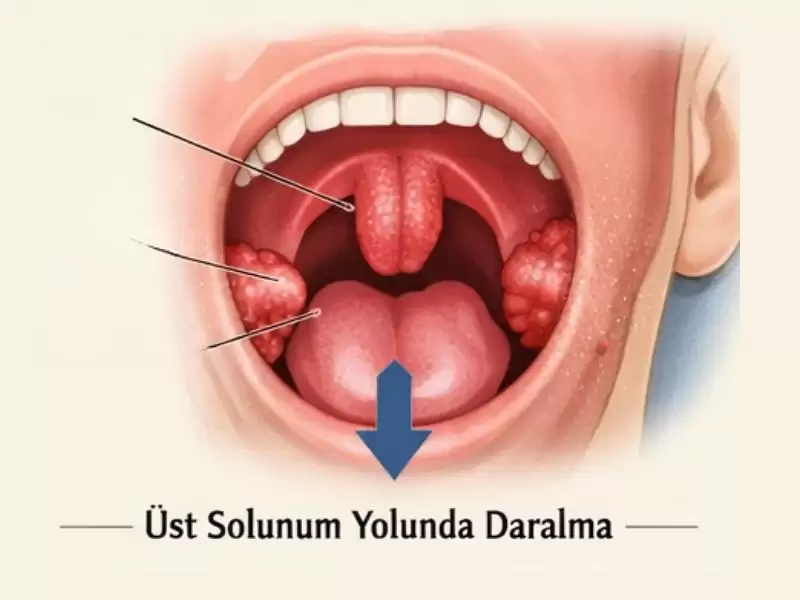
For doctors who perform UPPP surgery, the main approach is not to apply the same surgical procedure to every patient, but to accurately eval...