
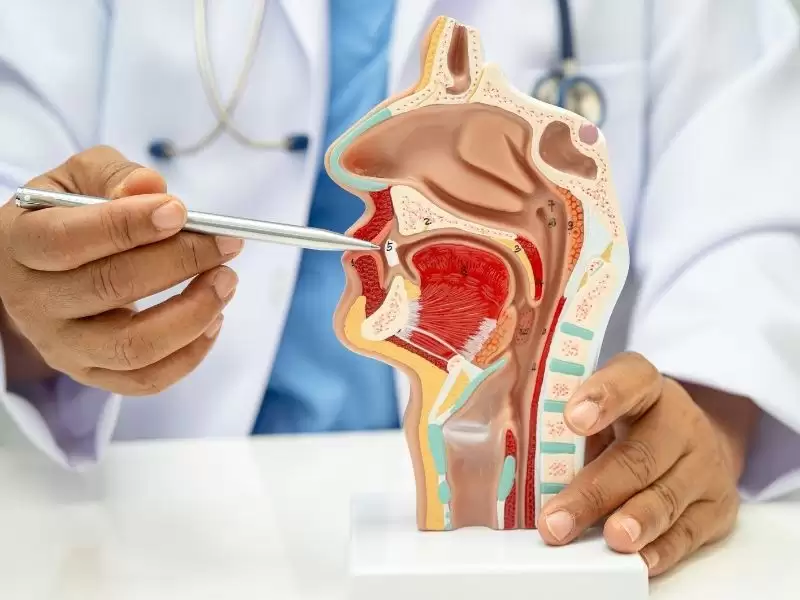
What Is Tonsillectomy and Adenoidectomy?
One of the most commonly performed surgical procedures in the field of Ear, Nose, and Throat (ENT) is tonsillectomy and adenoidectomy. These...
For doctors who perform UPPP surgery, the main approach is not to apply the same surgical procedure to every patient, but to accurately evaluate the cause of the airway obstruction. This surgery, known as uvulopalatopharyngoplasty, is one of the surgical methods used especially in the treatment of snoring and obstructive sleep apnea. However, for a successful outcome, not only the surgery itself but also patient selection, airway analysis, and individualized planning are important.
Before UPPP surgery, the first issue the doctor focuses on is whether the patient will truly benefit from this procedure. Not every person with a complaint of snoring is a surgical candidate. In some patients, the problem originates from the soft palate, while in others, the nose, tongue base, or different parts of the throat may cause airway narrowing. For this reason, the source of the problem is evaluated in detail before making a surgical decision.
For doctors performing UPPP surgery, proper patient selection is one of the most important stages of treatment planning. It is carefully assessed whether the patient has only a complaint of snoring or a more comprehensive condition such as sleep apnea. The severity of sleep apnea, the patient’s general health status, body weight, airway anatomy, and response to previous treatments all play a role in this evaluation.
While surgical treatment may be appropriate for some individuals, different methods may need to be considered first for others. Therefore, doctors who perform UPPP surgery make the decision not only based on the complaint itself, but also on examination and evaluation findings.
In patients scheduled for UPPP surgery, it is necessary to determine which part of the airway is narrowed. For this, an endoscopic examination and a detailed ear, nose, and throat assessment may be performed. The aim is to reveal whether the obstruction is limited to the soft palate or involves multiple levels.
This stage is important because not every snoring or sleep apnea problem originates from the same area. In some patients, the tongue base is involved; in others, nasal obstruction; and in some, multiple anatomical areas may contribute together. For this reason, doctors who perform UPPP surgery focus not only on the visible area but on the entire upper airway.
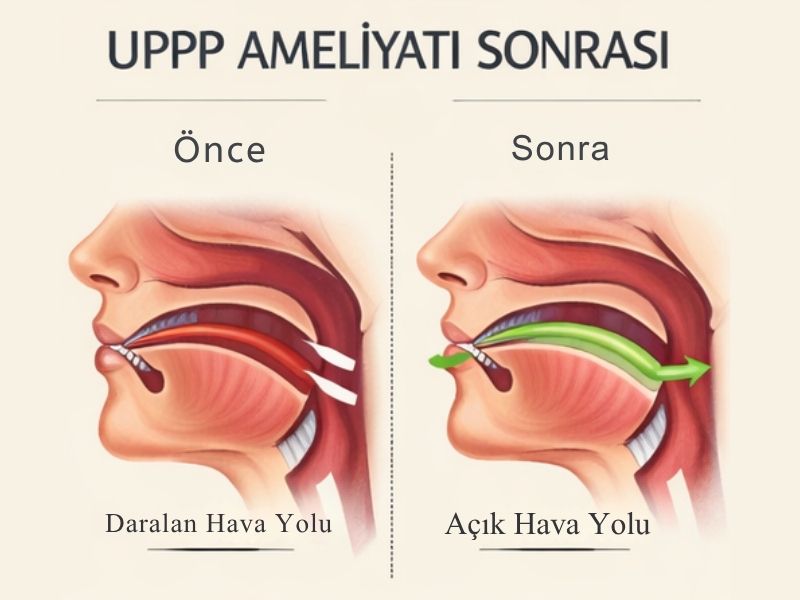
In the current approach, the airway is not evaluated through a single region alone. Doctors who perform UPPP surgery also take the tongue base, nose, and nasopharyngeal area into account along with the soft palate. This multilevel assessment helps plan surgery more accurately.
In some patients, intervention to the palate area alone may be sufficient, while in others, additional procedures may be required. Therefore, in modern sleep surgery, clearly identifying the area where the problem is located directly affects treatment success.
For doctors who perform UPPP surgery, widening the airway alone is not enough. At the same time, swallowing function, speech, and the natural structure of the throat should also be preserved. Considering this balance during surgical planning is important for postoperative quality of life.
This is also why more conservative techniques are preferred today. Avoiding unnecessary tissue removal can both make the healing process more comfortable and reduce the risk of certain unwanted effects.
Although broader tissue removal approaches were used in the past, more controlled and conservative methods are now at the forefront of current surgical practice. Doctors who perform UPPP surgery pay attention to intervening only in the necessary areas and preserving the anatomical structure as much as possible.
This approach may help reduce issues such as postoperative pain, difficulty swallowing, and loss of function. For this reason, the goal in surgical planning is not simply to remove tissue, but to improve the airway in a functional way.
Snoring surgery includes procedures aimed at surgically correcting structural causes that lead to narrowing of the upper airway. The same method is not preferred for every patient with a snoring complaint. This is because the source of snoring may be the soft palate, uvula, nose, tongue base, or different parts of the throat. For this reason, the level of airway narrowing is evaluated in detail before a surgical decision is made. UPPP surgery is also one of the surgical options used in the treatment of snoring. However, when planning snoring surgery, not only the presence of the complaint but also the severity of sleep apnea, anatomical structure, and the patient’s overall health status are taken into consideration together.
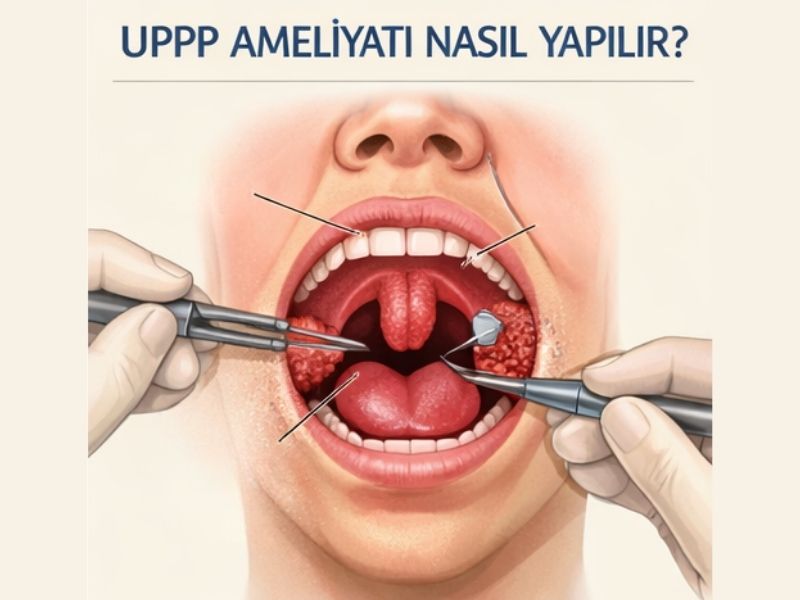
UPPP surgery is a surgical procedure aimed at widening the airway by reshaping the uvula, soft palate, and the back part of the throat. It may be performed in a selected group of patients, especially in the treatment of obstructive sleep apnea and snoring.
However, this surgery is not suitable for everyone. Doctors who perform UPPP surgery make a detailed evaluation to determine which patient group is likely to benefit from the procedure. For this reason, the decision for surgery is made on an individual basis.
There is no single technique in UPPP surgery that applies to all patients. This is because each patient’s anatomical structure, the level of airway narrowing, and the severity of sleep apnea are different. Therefore, the surgical technique may also vary from person to person.
Different techniques such as classic UPPP, modified UPPP, lateral pharyngoplasty, and expansion sphincter pharyngoplasty may be used. Which approach is preferred is determined according to the patient’s examination findings and surgical needs.
UPPP surgery is generally considered for certain patient groups. Severe snoring, moderate or advanced sleep apnea, inability to tolerate CPAP therapy, and marked obstruction at the level of the soft palate may be included in this evaluation. However, the final decision is made after a detailed examination.
For this reason, doctors who perform UPPP surgery do not plan treatment based solely on the complaint, but by evaluating the patient’s entire airway structure together with the characteristics of the sleep disorder.
| Patient condition | Key point considered during evaluation | Approach in terms of UPPP |
|---|---|---|
| Patients with severe snoring | It is assessed whether the snoring is related to the soft palate and throat region | It may be considered among the surgical options in suitable patients |
| Patients with obstructive sleep apnea | The severity of sleep apnea and the level of obstruction are determined | It may be included in the treatment plan in selected patients |
| Patients who cannot tolerate CPAP | Alternative treatment options and anatomical suitability are evaluated | It may be considered in patients with suitable anatomy |
| Patients with narrowing at the level of the soft palate | It is evaluated whether the obstruction mainly originates from the palate and throat region | They may be more suitable candidates for UPPP |
| Patients with multilevel airway narrowing | The nose, palate, tongue base, and throat are evaluated together | It may be part of a standalone or combined surgical plan |
| Patients whose general health is suitable for surgery | Surgical tolerance, coexisting diseases, and the healing process are taken into account | Surgical planning is individualized |
After UPPP surgery, sore throat and temporary sensitivity while swallowing may occur. Although the recovery period varies from patient to patient, most people show improvement within a few weeks. In the postoperative period, it is important to follow the doctor’s recommendations, pay attention to diet, and not miss follow-up visits.
The outcome of the surgery may vary depending on the technique used, the patient’s anatomical structure, and the level of the airway problem. For this reason, expectations should be evaluated realistically.

Yasal Uyarı:
Her cerrahi veya girişimsel işlemde sonuçlar kişiden kişiye değişiklik gösterebilir. İşlem öncesinde hekiminizden detaylı görüş almanız önerilir.
One of the most commonly performed surgical procedures in the field of Ear, Nose, and Throat (ENT) is tonsillectomy and adenoidectomy. These...
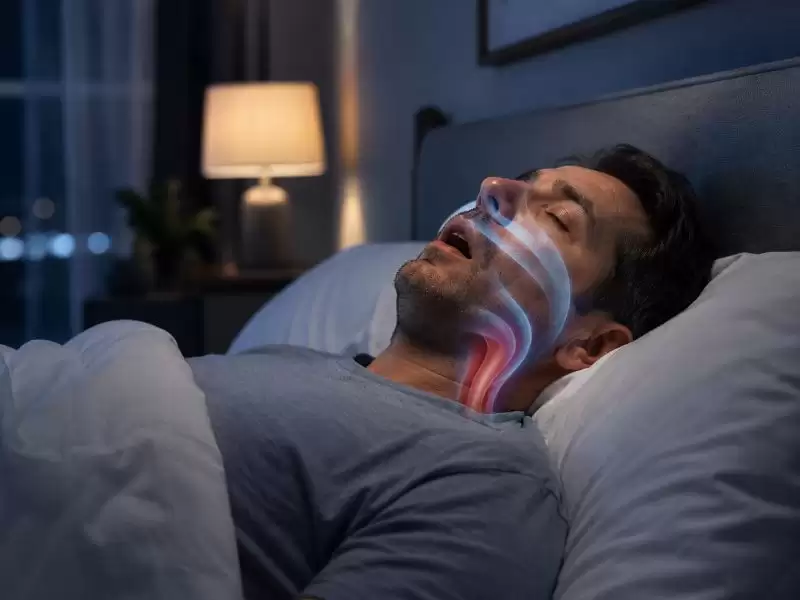
Sleep apnea is a sleep-related breathing disorder characterized by brief pauses or significant reductions in breathing during sleep....

Salivary gland diseases include various conditions that affect saliva production, saliva flow, or the structure of the salivary glands....