

What is nasal tip aesthetics (tipplasty)?
Nasal tip aesthetics, medically known as tipplasty, is a shaping procedure performed only on the tip of the nose....
Rhinoplasty, medically known as rhinoplasty, is a surgical procedure aimed at reshaping the nose's shape, size, and proportions to harmonize with the face. Rhinoplasty is not only aimed at improving aesthetic appearance; it may also address breathing problems related to internal nasal structures. Therefore, rhinoplasty requires a comprehensive surgical planning process that evaluates both aesthetic and functional goals together.
The primary goal of rhinoplasty is to ensure that the nose achieves a balanced, natural, and harmonious appearance in proportion to the overall face. In facial aesthetics, the nose is directly related to the forehead, lips, and chin. Therefore, when planning rhinoplasty, not only the nose but the entire facial anatomy is considered.
From a functional perspective, rhinoplasty also allows the correction of breathing difficulties, such as deviations in the nasal septum, nasal valve narrowing, or trauma-induced deformations. In this sense, rhinoplasty is evaluated in conjunction with the principles of otolaryngology, beyond aesthetic surgery.

Rhinoplasty can be considered for individuals who are dissatisfied with the appearance of their nose, believe it is disproportionate to their face, or experience breathing problems. It is generally planned after the completion of bone and cartilage development, typically at the age of 18 and older. However, suitability is determined not by age but by the individual’s anatomical structure, expectations, and overall health condition. An important point in rhinoplasty is to achieve a natural change without altering the person’s facial character. Therefore, rhinoplasty is not a standard procedure but a surgery planned for each individual.
Rhinoplasty can be performed using different techniques, and each technique is determined based on the patient's needs:
In this technique, a small incision is made at the tip of the nose, allowing the nose framework to be evaluated with a wider view. It is particularly preferred in cases of complex deformations, severe shape irregularities, and revision surgeries.
In this method, all incisions are made inside the nose, so there is no visible external scar. It can be planned for more limited interventions in appropriate patients.
In cases where breathing problems are prominent, the internal nasal structures are reshaped along with aesthetic adjustments.

These are secondary surgeries performed for patients who have previously undergone rhinoplasty but did not achieve the desired aesthetic or functional results. It requires more detailed planning compared to the initial surgery.
The goal of modern rhinoplasty is not to achieve a prominent, incompatible, or artificial-looking nose but to create a natural result that enhances the person’s facial expression. Overly thin, excessively upturned, or disproportionate noses may not be aesthetically satisfying in the long term.
Therefore, in modern rhinoplasty, the focus is on restructuring the nose bridge, tip, and the nasolabial angle with minimal intervention to ensure harmony with the face.
The rhinoplasty process begins with a detailed examination and analysis. The thickness of the nose skin, cartilage structure, bony structure, and facial proportions are evaluated. Digital analyses and photographic studies are an essential part of the surgical planning. The aim at this stage is to plan a realistic and sustainable result that is compatible with the patient’s anatomical structure.
The post-surgery process may vary depending on swelling and recovery time, which differs from person to person. Rhinoplasty results settle over time, and the nasal tissues reach their final shape within months.
The goal of modern rhinoplasty is to achieve a nose appearance that is harmonious with the face, natural, and not attention-grabbing. Overly thin, excessively upturned, or disproportionate noses may not be aesthetically satisfying in the long term.
Therefore, modern rhinoplasty is planned with minimal tissue trauma, balanced cartilage support, and techniques that preserve facial integrity.
The recovery process after rhinoplasty can vary depending on the individual. Swelling and bruising are more prominent in the first weeks. The nasal tissues generally take several months to reach their final form.
Results settle over time, and the nose becomes more harmonious with the face.
Rhinoplasty is a surgical procedure that addresses both aesthetic expectations and functional requirements, requiring high expertise and experience. Every nose and every face is different; therefore, rhinoplasty is not a one-size-fits-all application but a planning process tailored to each individual. Proper analysis, a balanced surgical approach, and goals aligned with the face form the foundation for long-term satisfaction in rhinoplasty.
Yasal Uyarı:
Her cerrahi veya girişimsel işlemde sonuçlar kişiden kişiye değişiklik gösterebilir. İşlem öncesinde hekiminizden detaylı görüş almanız önerilir.
Nasal tip aesthetics, medically known as tipplasty, is a shaping procedure performed only on the tip of the nose....
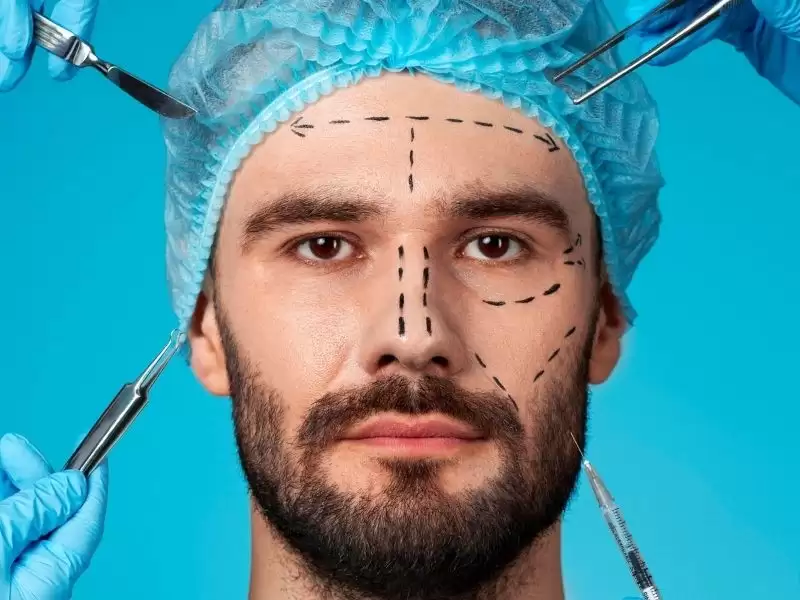
Rhinoplasty surgery, when planned correctly, provides more predictable results both aesthetically and functionally. The preoperative period ...