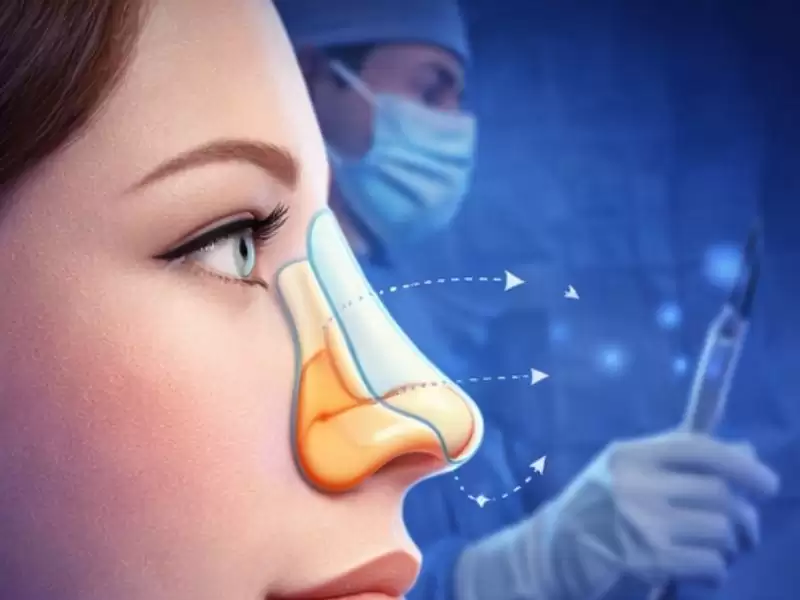


Natural rhinoplasty is a concept frequently used in rhinoplasty planning, but it should be evaluated differently for each patient. Natural rhinoplasty does not refer to a single nose model; it refers to a plan that is compatible with the patient’s facial proportions, nasal structure, skin thickness, and breathing function.
In modern rhinoplasty, the goal is not to evaluate the nose alone, but to assess it together with the forehead, lips, chin, cheek structure, and facial profile. In this process, nasal support, facial expression, and functional needs should also be considered along with aesthetic appearance.
- What Natural Rhinoplasty Is Not
- What Does Natural Rhinoplasty Mean?
- Basic Principles Of Natural Rhinoplasty
- Nose Planning Suitable For The Face
- How Are Golden Ratio And Angles Evaluated?
- Avoiding Excessive Intervention
- Natural Nasal Tip Appearance And Mobility
- Light Line And Soft Transitions
- Is Natural Nose Planning Different In Women And Men?
- Is Natural Rhinoplasty Possible In Thick-Skinned Noses?
- Healing Process After Natural Rhinoplasty
- Does A Natural Appearance Affect The Need For Revision?
- How Can Natural Rhinoplasty Be Understood?
- Conclusion
What Natural Rhinoplasty Is Not
Natural rhinoplasty does not mean applying the same nose shape to every patient. In rhinoplasty, naturalness should be evaluated through a plan that is suitable for the patient’s facial structure and avoids exaggerated changes.
- It is not a single nose model applied to everyone
- It does not mean an overly lifted nasal tip
- It does not aim for overly thin, sharp, or rigid lines
- It is not a nose plan that stands out independently from the face
- It is not creating a copied nose model
Natural rhinoplasty is more about evaluating the patient’s own facial proportions and nasal anatomy than following trending nose models.
What Does Natural Rhinoplasty Mean?
Natural rhinoplasty means evaluating the nose together with the overall balance of the face. In this planning process, not only the nasal dorsum or nasal tip, but also the facial profile and breathing function are considered.
- Being compatible with overall facial proportions
- Appearing balanced with the forehead, lips, and chin line
- Being evaluated together with facial expressions and mimic structure
- Planning while preserving nasal support structures
In short, natural rhinoplasty aims to evaluate the nose in a balanced and harmonious way within the overall facial appearance.

Basic Principles Of Natural Rhinoplasty
Nose Planning Suitable For The Face
Each patient’s facial structure and nasal anatomy are different. Therefore, natural rhinoplasty planning should be based on the patient’s own facial measurements and structural features.
- Bone structure
- Skin thickness
- Facial expression dynamics
- Age and gender-related facial features
- Internal nasal airway and breathing function
In natural rhinoplasty, the nose should not be shaped to resemble someone else’s nose; it should be evaluated according to the patient’s own facial structure and medical suitability.

How Are Golden Ratio And Angles Evaluated?
Golden ratio and aesthetic angles may be used as supportive measurements in rhinoplasty planning. However, these measurements are not applied to every patient in the same way.
- They are evaluated individually according to facial proportions
- They are considered together with the nasal dorsum, nasal tip, and profile balance
- Mathematical measurements are evaluated together with the natural perception of the face
The goal is not to create a purely mathematical appearance, but to plan a rhinoplasty that is compatible with the overall balance of the face.
Avoiding Excessive Intervention
In natural rhinoplasty, it is important to avoid unnecessary reduction or excessive interventions that may disrupt facial proportions.
- The supporting structures of the nose are evaluated with preservation in mind
- Planning is made for the areas that actually require correction
- Nasal tip support and breathing function are considered
The main goal of this approach is to create a personalized plan that supports facial harmony and helps preserve functional nasal structures.
Natural Nasal Tip Appearance And Mobility
In a natural nose appearance, the nasal tip should be evaluated together with facial proportions and facial expression structure. A nasal tip that looks too rigid, too low, or incompatible with the face may affect the perception of naturalness.
- Nasal tip support should be preserved
- The nasal tip angle should be evaluated according to the facial profile
- Facial expression and mimic structure should be considered
Nasal tip aesthetics is one of the important topics in natural appearance planning and should be approached differently for each patient.
Light Line And Soft Transitions
In natural rhinoplasty, the nasal dorsum, nasal tip, and sidewall transitions are evaluated together. Instead of sharp breaks or transitions that are not compatible with the face, a more balanced appearance is planned.
- The nasal dorsum is evaluated together with the facial profile
- Soft transitions may support the perception of a natural appearance
- Light reflection and profile line may be assessed through photo analysis
This evaluation may help the nose appear harmonious within the entire face rather than being assessed on its own.
Is Natural Nose Planning Different In Women And Men?
Rhinoplasty planning may differ between women and men in terms of facial proportions and aesthetic expectations. Therefore, natural rhinoplasty should be evaluated according to gender, facial structure, and personal needs.
In natural nose planning for women, the following points may be considered:
- Softer transitions
- A nasal tip angle suitable for the facial profile
- Avoiding an overly lifted appearance
In natural nose planning for men, the following points may be evaluated:
- Preserving a straighter and stronger nasal dorsum line
- Considering masculine facial proportions
- Avoiding excessive narrowing
Naturalness does not mean creating the same appearance in every patient; it means planning an aesthetic balance suitable for the patient’s facial structure.
Is Natural Rhinoplasty Possible In Thick-Skinned Noses?
Natural rhinoplasty in thick-skinned noses can be planned; however, the approach may differ from thin-skinned noses. In patients with thick skin, a more supported and balanced plan may be needed instead of very sharp lines.
- Very sharp lines may not be suitable for every patient
- Nasal tip and cartilage support are carefully evaluated
- Swelling and healing may require longer follow-up
In these patients, a natural appearance means a plan that is not exaggerated, is compatible with facial proportions, and is suitable for the nasal structure.
Healing Process After Natural Rhinoplasty
Healing after natural rhinoplasty may vary depending on the extent of the procedure, skin thickness, nasal tip support, and the patient’s tissue healing response. Swelling and sensitivity in the first weeks are expected parts of the process.
- Swelling and a feeling of nasal congestion may occur in the first weeks
- Nasal contours become more noticeable over time
- The nasal tip and skin tissue are evaluated in the long term
Giving an exact timeline for healing is not appropriate. Follow-up visits should be continued according to the physician’s plan.
Does A Natural Appearance Affect The Need For Revision?
The need for revision is not related only to whether the appearance is natural or more defined. Nasal structure, skin thickness, healing process, previous surgical planning, trauma, and patient expectations may all play a role in revision evaluation.
Excessive reduction, weakening of nasal support structures, or planning that is not compatible with facial proportions may increase dissatisfaction risk in some patients. Therefore, natural rhinoplasty planning should consider nasal support and breathing function as well as aesthetic appearance.
How Can Natural Rhinoplasty Be Understood?
Natural rhinoplasty can be understood when the nose is evaluated in harmony with the overall proportions of the face. The nose should be considered together with the facial profile, facial expressions, and personal features rather than standing out on its own.
- The nose should appear compatible with facial proportions
- Nasal tip support and profile balance should be preserved
- Breathing function should be included in surgical planning
- The patient’s expectations should be evaluated realistically
Conclusion
Natural rhinoplasty is not an approach focused only on changing the shape of the nose. Nasal shape, facial proportions, skin structure, facial expression characteristics, and breathing function should be evaluated together to create a personalized rhinoplasty plan.
For realistic and balanced planning, nasal structure, facial profile, and medical suitability should be assessed together. Suitability for natural rhinoplasty should be determined after examination and physician evaluation.
This content is intended for general informational purposes only. It does not replace diagnosis, treatment planning, or personalized surgical evaluation. Rhinoplasty and natural nose aesthetics planning should be determined after examination and physician evaluation.
Yasal Uyarı:
Her cerrahi veya girişimsel işlemde sonuçlar kişiden kişiye değişiklik gösterebilir. İşlem öncesinde hekiminizden detaylı görüş almanız önerilir.