
Nosebleeds in children are a common occurrence during childhood, although they can be concerning for parents. Blood vessels located close to the surface of the nasal lining, dry air, nose picking, allergic rhinitis, infections, or nasal trauma may cause bleeding. The frequency and duration of the bleeding, whether it occurs on one or both sides, and whether other signs of bleeding are present should be evaluated together.
- What Are Nosebleeds in Children?
- What Causes Nosebleeds in Children?
- What Symptoms Can Accompany a Nosebleed?
- Differences Between Anterior and Posterior Nosebleeds
- How Should First Aid Be Provided for Nosebleeds in Children?
- When Should Nosebleeds in Children Be Taken Seriously?
- How Are Nosebleeds in Children Diagnosed?
- How Is Treatment for Nosebleeds in Children Planned?
- How Can Recurrent Nosebleeds Be Reduced?
- Frequently Asked Questions About Nosebleeds in Children
- When Are Nosebleeds in Children Dangerous?
- Why Do Children Have Nosebleeds While Sleeping?
- Can Allergies Cause Nosebleeds?
- What Causes One-Sided Nosebleeds in Children?
- References
What Are Nosebleeds in Children?
Nosebleeds in children occur when small blood vessels inside the nose become irritated or damaged. Most nosebleeds originate from the front part of the nose and can often be controlled quickly with appropriate first aid.
The nasal lining in children may be more sensitive than in adults. Dry environments, frequent nose wiping, crusting, allergy-related itching, and infections can easily irritate the inside of the nose. In cases of recurrent nosebleeds, it is important not only to stop the bleeding but also to identify the underlying cause.
What Causes Nosebleeds in Children?
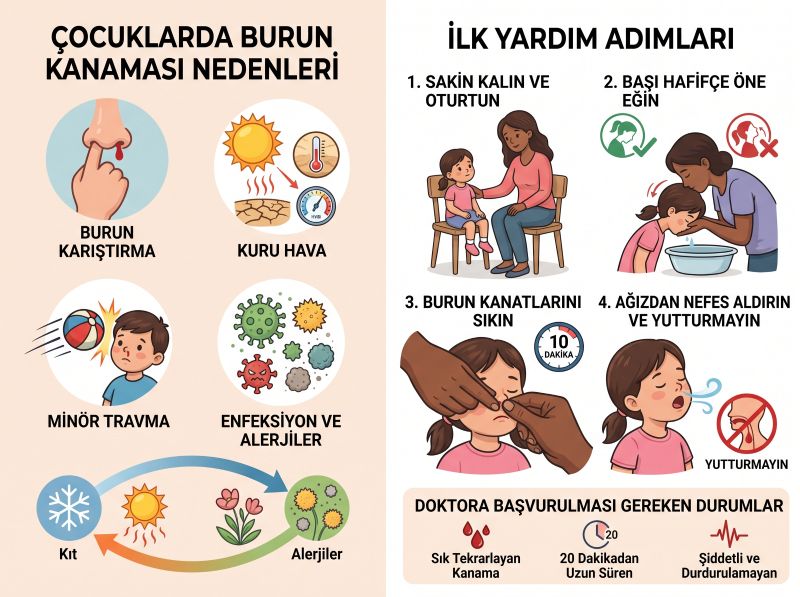
The most common causes of nosebleeds in children include nose picking, dryness inside the nose, crusting, and upper respiratory tract infections. When a child frequently scratches their nose or blows it forcefully, the small blood vessels inside the nose may bleed easily.
Allergic rhinitis may increase the risk of bleeding due to nasal itching and frequent sneezing. Other possible causes that may need to be evaluated include nasal trauma, falls or impacts, foreign bodies, sinusitis, enlarged nasal turbinates, certain medications, and, rarely, bleeding or clotting disorders.
What Symptoms Can Accompany a Nosebleed?
A nosebleed is usually noticed when blood comes from the nose. Bleeding may occur from one nostril or, in some cases, from both nostrils. If a child swallows blood, they may experience nausea, vomiting, or a taste of blood in the throat.
Frequent nosebleeds may be accompanied by crusting, dryness, itching, congestion, or a runny nose. Weakness, paleness, dizziness, or faintness after bleeding requires closer evaluation. If a child also has unexplained bruising, bleeding gums, or prolonged bleeding from other areas, an assessment by both a pediatrician and an ENT specialist may be necessary.
Differences Between Anterior and Posterior Nosebleeds
Most nosebleeds in children originate from the front part of the nose. Posterior nosebleeds are less common in children but may be heavier and more difficult to control.
| Feature | Anterior Nosebleed | Posterior Nosebleed |
|---|---|---|
| Source | Blood vessels in the front part of the nose | Blood vessels in the back part of the nose |
| Frequency | More common in children | Less common |
| Bleeding Pattern | Blood usually flows out through the nostril | Blood may flow toward the throat |
| Bleeding Control | Often stops with direct pressure | May require medical evaluation |
| Associated Factors | Dryness, crusting, and nose picking | Trauma, heavy bleeding, or other underlying causes may need investigation |
Parents may not be able to distinguish these types of nosebleeds with certainty. The amount of bleeding, its duration, and how frequently it occurs are important factors in evaluation.
How Should First Aid Be Provided for Nosebleeds in Children?
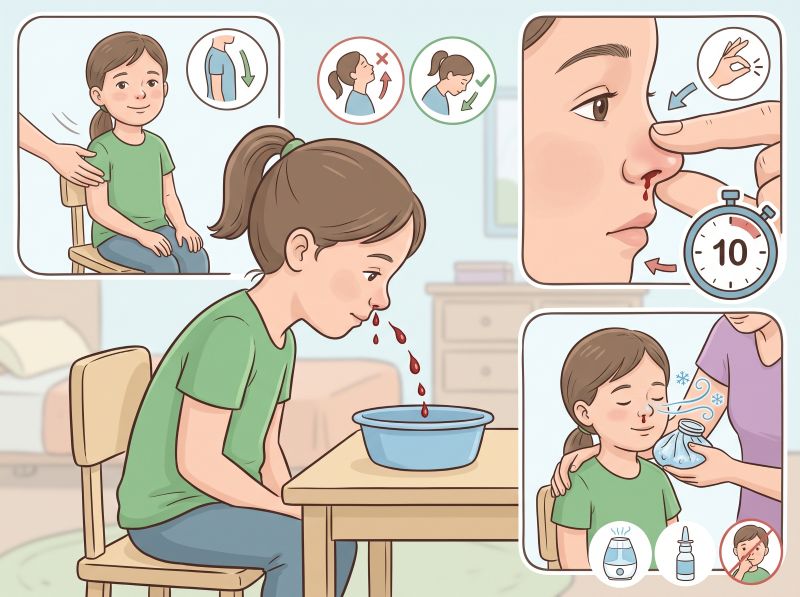
It is important to keep the child calm during a nosebleed. The child should sit upright with their head tilted slightly forward to prevent blood from flowing into the throat. Tilting the head backward is not recommended because it may cause the child to swallow blood and experience nausea.
Continuous pressure should be applied to the soft part of the nose, just above the nostrils. This pressure should generally be maintained for 10–15 minutes. During this time, the child can breathe through their mouth. Repeatedly releasing pressure to check whether the bleeding has stopped may disrupt clot formation and prolong the bleeding.
When Should Nosebleeds in Children Be Taken Seriously?
Recurrent nosebleeds should always be taken seriously. Medical evaluation is necessary if bleeding occurs frequently, lasts a long time, is heavy, or recurs easily after minor trauma.
Medical attention should be sought if a nosebleed lasts longer than 15–20 minutes, begins after trauma, or is accompanied by fainting, paleness, breathing difficulties, or significant weakness. Nosebleeds in children younger than two years old also require careful evaluation. Medical assessment should not be delayed if the child takes blood-thinning medication, has a known blood disorder, or has a family history of bleeding disorders.
How Are Nosebleeds in Children Diagnosed?
An ENT examination helps determine where the bleeding originates and whether another condition is present inside the nose. The examination may assess nasal dryness, crusting, visible blood vessels, signs of allergies, foreign bodies, infections, or evidence of trauma.
In cases of frequent nosebleeds, the child's bleeding history is reviewed in detail. The physician may ask which nostril is affected, how long the bleeding lasts, what triggers it, whether the child frequently picks their nose, whether allergy symptoms are present, and which medications are being used. When necessary, a complete blood count or clotting tests may be requested in coordination with a pediatrician.
How Is Treatment for Nosebleeds in Children Planned?
Treatment for nosebleeds in children should be planned according to the underlying cause. If nasal dryness is present, humidification, saline nasal sprays, or recommendations for nasal care may be considered. If allergic rhinitis is present, treatment may be planned to reduce itching and sneezing.
If a clearly visible bleeding vessel is identified inside the nose, procedures such as chemical cauterization may be considered for some patients. However, this decision should be based on the child's age, frequency of bleeding, examination findings, and location of the bleeding source. Placing cotton or tissues into the nose without proper guidance may irritate the nasal lining and should be avoided unless recommended by a physician.
How Can Recurrent Nosebleeds Be Reduced?
Preventing dryness inside the nose is important for reducing recurrent nosebleeds in children. Maintaining appropriate indoor humidity, ensuring adequate fluid intake, avoiding aggressive nose picking, and not forcibly removing nasal crusts may help.
If allergic rhinitis, frequent nose scratching, or nasal congestion is present, managing these conditions may help reduce the frequency of bleeding. Keeping the child's fingernails short, avoiding irritation inside the nose, and teaching proper nose-blowing techniques may also help prevent recurrence.
Although nosebleeds in children are often caused by minor factors, frequent, prolonged, or heavy bleeding requires investigation of the underlying cause. This content is intended for general informational purposes and does not replace medical diagnosis or treatment planning. The appropriate approach to nosebleeds in children should be determined following a medical examination and physician evaluation.
Frequently Asked Questions About Nosebleeds in Children
When Are Nosebleeds in Children Dangerous?
Medical attention should be sought if bleeding does not stop after 10–15 minutes of continuous pressure, occurs frequently, or is accompanied by weakness, paleness, dizziness, or faintness. If the child also bruises easily or has bleeding gums, evaluation by both a pediatrician and an ENT specialist may be necessary.
Why Do Children Have Nosebleeds While Sleeping?
Dry indoor air at night, crusting inside the nose, and scratching the nose during sleep may trigger bleeding. If nosebleeds recur frequently, the underlying cause should be investigated.
Can Allergies Cause Nosebleeds?
Allergic rhinitis, nasal itching, and frequent sneezing may irritate the inside of the nose and increase the risk of bleeding.
What Causes One-Sided Nosebleeds in Children?
Most nosebleeds originate from small blood vessels in the front part of the nose and occur on one side. If bleeding repeatedly occurs from the same nostril, other causes, such as a foreign body, should also be evaluated.
References
- Tunkel DE, et al. Clinical Practice Guideline: Nosebleed (Epistaxis). Otolaryngol Head Neck Surg. 2020;162(1_suppl):S1–S38. (American Academy of Otolaryngology–Head and Neck Surgery Foundation)
Yasal Uyarı:
Her cerrahi veya girişimsel işlemde sonuçlar kişiden kişiye değişiklik gösterebilir. İşlem öncesinde hekiminizden detaylı görüş almanız önerilir.