

Rhinoplasty and sinusitis surgery, namely FESS, can be performed in the same session in suitable patients. While rhinoplasty focuses on improving the appearance of the nose and reshaping the nasal framework, FESS aims to open the sinus drainage pathways through the inside of the nose and relieve blockages that cause chronic sinusitis. For these two procedures to be planned together, the patient’s intranasal structure, sinus tomography, symptoms, and general health condition should be evaluated together. In patients in Istanbul who are considering rhinoplasty and also experience chronic sinusitis symptoms, focusing only on the shape of the nose may not be sufficient. If there is persistent nasal congestion, postnasal drip, facial pressure, headache, reduced sense of smell, and recurrent sinusitis attacks, the sinuses should also be examined before surgery. In this way, while aesthetic nasal planning is carried out, problems affecting sinus health can also be evaluated within the same process.
- Can Rhinoplasty and FESS Be Performed in the Same Session?
- What Is Evaluated Before Rhinoplasty in Patients with Sinusitis Complaints?
- In Which Cases Is FESS Planned Together with Rhinoplasty?
- Does Rhinoplasty Treat Sinusitis?
- Who May Be Suitable for Rhinoplasty and Sinusitis Surgery?
- Who May Not Be Recommended Rhinoplasty and FESS?
- Advantages of Rhinoplasty and Sinusitis Surgery and Points to Consider
- How Is the Preoperative Evaluation for Rhinoplasty and Sinusitis Surgery Performed?
- Recovery Process After Rhinoplasty and FESS
- When Does Breathing Become Easier After Rhinoplasty and FESS?
- Is Rhinoplasty and Sinusitis Surgery Performed in Istanbul?
- Can Rhinoplasty and Sinusitis Surgery (FESS) Be Performed Together FAQ
Can Rhinoplasty and FESS Be Performed in the Same Session?
Rhinoplasty and FESS can be performed in the same session; however, this decision is not made automatically for every patient. If the patient has both aesthetic expectations related to nasal shape and complaints related to chronic sinusitis, the two procedures can be considered within the same surgical plan. This approach allows the external nasal structure and intranasal sinus openings to be addressed in the same process.
FESS is a procedure performed through the inside of the nose with the help of a camera and aims to open the natural drainage pathways of the sinuses. Rhinoplasty, on the other hand, allows reshaping of areas such as the nasal bone, cartilage structure, nasal bridge, and nasal tip. Therefore, although the two surgeries have different goals, they can be planned together in suitable patients because they are performed in the same nasal region.
What Is Evaluated Before Rhinoplasty in Patients with Sinusitis Complaints?
In patients with sinusitis complaints, not only the external appearance of the nose is evaluated before rhinoplasty. Airflow inside the nose, openness of the sinus pathways, enlargement of the nasal turbinates, septal deviation, presence of polyps, and signs of chronic inflammation are also examined. This evaluation helps create a more accurate surgical plan.
Especially if there are complaints such as frequently recurring sinusitis attacks, long-term nasal congestion, a feeling of fullness in the facial area, postnasal drip, and reduced sense of smell, sinus tomography may be requested. Tomography is important because it shows the ventilation status of the sinuses and the location of the blockage. Thus, whether FESS is required during rhinoplasty can be determined more clearly.

In Which Cases Is FESS Planned Together with Rhinoplasty?
FESS may be considered in chronic sinusitis complaints that continue despite medical treatment. If the patient also has an expectation for nasal aesthetics and a surgical need related to the sinuses is detected, rhinoplasty and FESS can be planned in the same session.
This combined approach may especially be evaluated in patients with chronic sinusitis, nasal polyps, blockage in the sinus pathways, recurrent infections, and airflow problems related to nasal structure. However, not every sinusitis complaint requires surgery. In some patients, medical treatment, allergy control, and regular follow-up may be sufficient.

Does Rhinoplasty Treat Sinusitis?
Rhinoplasty is not a surgery performed directly for sinusitis treatment. Rhinoplasty reshapes the external appearance of the nose and may contribute to improving the nasal airway in some patients. However, if chronic sinusitis is caused by blockage in the sinus pathways, polyps, inflamed tissue, or structural narrowing, rhinoplasty alone may not be sufficient.
If sinusitis treatment is needed, the natural openings of the sinuses are corrected with FESS. Therefore, in patients with both aesthetic nasal expectations and chronic sinusitis problems, the two procedures do not replace each other; when necessary, they are planned in a complementary way.
Who May Be Suitable for Rhinoplasty and Sinusitis Surgery?
Rhinoplasty and FESS can be evaluated together in patients who are dissatisfied with the shape of their nose and also have long-term sinusitis complaints. Persistent nasal congestion, postnasal drip, facial pressure, reduced sense of smell, frequent antibiotic use, and recurrent sinusitis attacks are taken into consideration during this evaluation.
In patients planning rhinoplasty in Istanbul, if sinusitis has been diagnosed before or if recurrent intranasal complaints are present, preoperative ENT evaluation is important. In this process, aesthetic nasal expectations and sinus health are considered within the same surgical plan, and a patient-specific roadmap is created.
Who May Not Be Recommended Rhinoplasty and FESS?
The surgical plan may be postponed in patients with an active upper respiratory tract infection, intense inflammation in the sinuses that requires delaying surgery, risks related to general anesthesia, or unrealistic expectations. In addition, if sinusitis complaints are mild and can be controlled with medical treatment, FESS may not be necessary.
In some patients, only rhinoplasty may be sufficient, while in others, sinusitis treatment may need to be arranged first. The decision should be made by considering examination findings, endoscopic evaluation, tomography results, and the duration of the patient’s complaints.
Advantages of Rhinoplasty and Sinusitis Surgery and Points to Consider
| Advantages | Points to Consider |
|---|---|
| Nasal appearance and sinus pathways can be evaluated within the same surgical plan. | Not every sinusitis complaint requires FESS. |
| Rhinoplasty and FESS can be completed under a single anesthesia. | A decision should not be made without sinus tomography and intranasal evaluation. |
| Chronic sinusitis and aesthetic nasal expectations can be addressed in the same process. | The surgery duration may be longer compared to a single procedure. |
| The need for a second surgical preparation may decrease. | Nasal congestion, crusting, and discharge may be seen in the first weeks. |
| Intranasal airflow and sinus ventilation can be planned together. | Nasal care and follow-up appointments should not be neglected during recovery. |
How Is the Preoperative Evaluation for Rhinoplasty and Sinusitis Surgery Performed?
Before rhinoplasty and sinusitis surgery , the patient’s aesthetic nasal expectations, breathing status, and sinusitis complaints are evaluated together. How long the complaints have been present, how many times they recur during the year, how they respond to medical treatment, and allergy history are questioned.
With intranasal endoscopic examination, septal deviation, enlargement of the nasal turbinates, polyps, discharge, and narrowing at the sinus openings are examined. Sinus tomography is requested when necessary. This evaluation is one of the important stages that determines whether FESS will be performed during rhinoplasty.
Recovery Process After Rhinoplasty and FESS
When rhinoplasty and FESS are performed together, nasal congestion, mild bloody discharge, crusting, a feeling of pressure, and fullness in the facial area may occur in the first days after surgery. These symptoms may be part of the recovery process and usually decrease over time.
Nasal care recommendations are important during this process. Sprays recommended by the physician, nasal rinsing practices, and follow-up appointments should not be neglected. After rhinoplasty, the reduction of swelling in the external nasal structure may take longer. The healing status of the sinus area after FESS is monitored according to nasal care, regular check-ups, and findings during the recovery process.
When Does Breathing Become Easier After Rhinoplasty and FESS?
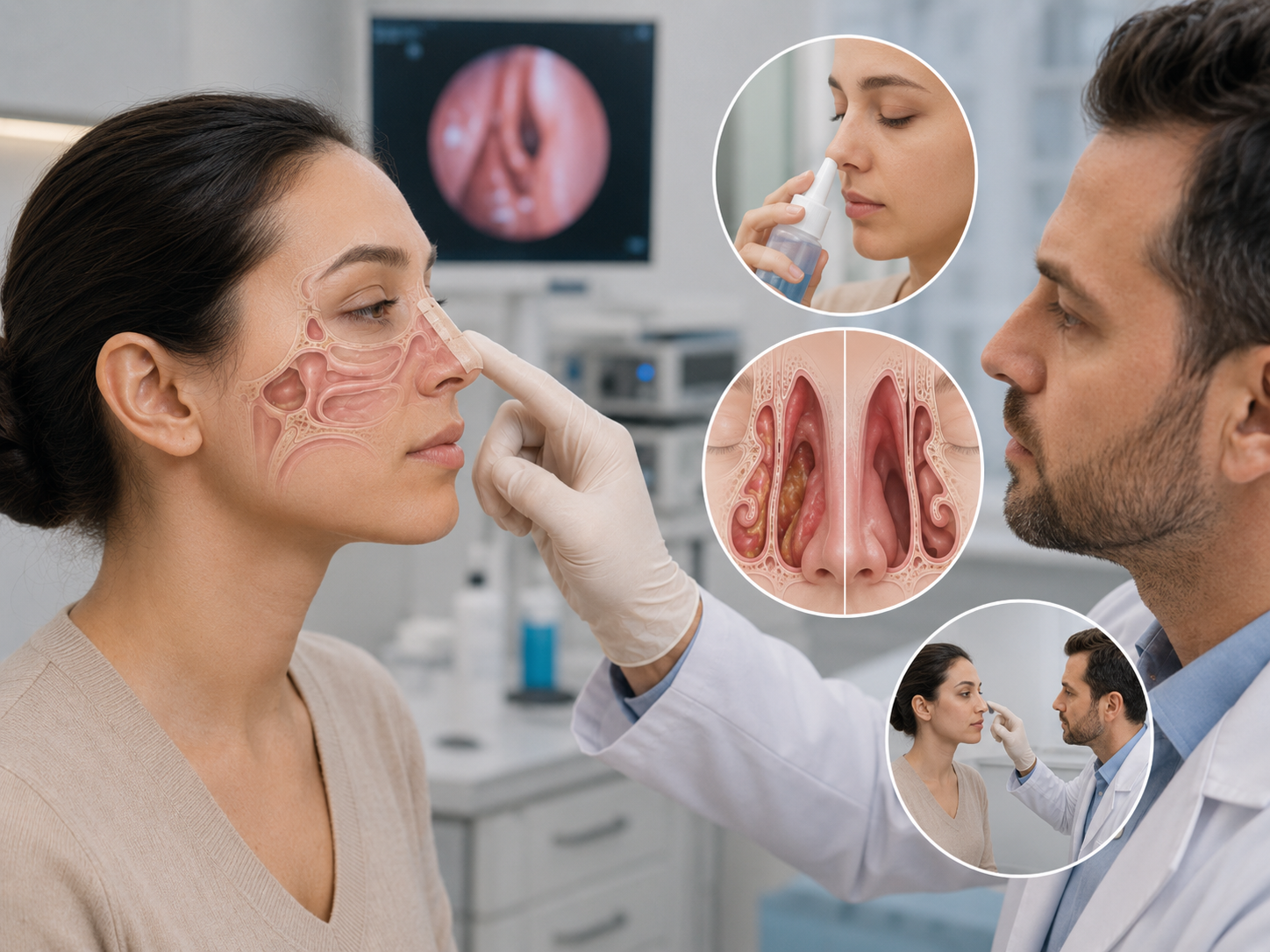
Breathing may not become fully comfortable in the first days after surgery due to intranasal swelling and crusting. This may be felt more clearly, especially in patients who undergo both procedures together. As swelling inside the nose decreases, airflow becomes more comfortable. In some patients, noticeable relief begins within a few weeks. However, full recovery of the sinuses and intranasal tissues may take longer. The final nasal shape is evaluated over the months depending on the rhinoplasty process.
Is Rhinoplasty and Sinusitis Surgery Performed in Istanbul?
Rhinoplasty in Istanbul and sinusitis surgery can be evaluated in the same session. In patients planning nasal aesthetics but experiencing complaints such as chronic sinusitis, nasal congestion, postnasal drip, or reduced sense of smell, a detailed ENT evaluation should be performed before surgery. While planning the rhinoplasty process in Istanbul, not only the external appearance of the nose but also the nasal airway and sinus health should be taken into account. This approach helps manage expectations after surgery more accurately, not only regarding aesthetic appearance but also nasal breathing and sinus ventilation.
Can Rhinoplasty and Sinusitis Surgery (FESS) Be Performed Together FAQ
Can rhinoplasty and sinusitis surgery be performed at the same time?
Yes. In suitable patients, rhinoplasty and FESS can be performed in the same session. This decision is made after evaluating the intranasal examination, sinus tomography, and the patient’s complaints.
Does FESS make rhinoplasty surgery more difficult?
FESS can be performed in the same session as rhinoplasty; however, it makes the surgical planning more detailed. The order of the procedures and the surgical approach are determined according to the patient’s nasal and sinus structure.
Does rhinoplasty completely cure sinusitis?
Rhinoplasty is not a procedure performed to treat sinusitis. If chronic sinusitis is present and a surgical need is identified, FESS can be used to correct the sinus pathways.
Does sinusitis surgery change the shape of the nose?
FESS is a procedure performed through the inside of the nose, and its main purpose is to open the sinus pathways. If an aesthetic change in the external appearance of the nose is desired, it should be planned together with rhinoplasty.
How long does nasal congestion last after rhinoplasty and FESS?
In the first weeks, nasal congestion may continue due to intranasal swelling, crusting, and discharge. As healing progresses, breathing through the nose becomes more comfortable.
Should everyone with chronic sinusitis undergo FESS?
No. Chronic sinusitis treatment is not performed with surgery in every patient. FESS may be considered when medical treatment, allergy control, and nasal care are not sufficient.
Is sinus tomography necessary before rhinoplasty in Istanbul?
It is not mandatory for every patient. However, if there is chronic sinusitis, recurrent infection, facial pressure, postnasal drip, or reduced sense of smell, sinus tomography may be requested.
Yasal Uyarı:
Her cerrahi veya girişimsel işlemde sonuçlar kişiden kişiye değişiklik gösterebilir. İşlem öncesinde hekiminizden detaylı görüş almanız önerilir.