

Why Is Rib Cartilage Used In Revision Rhinoplasty?
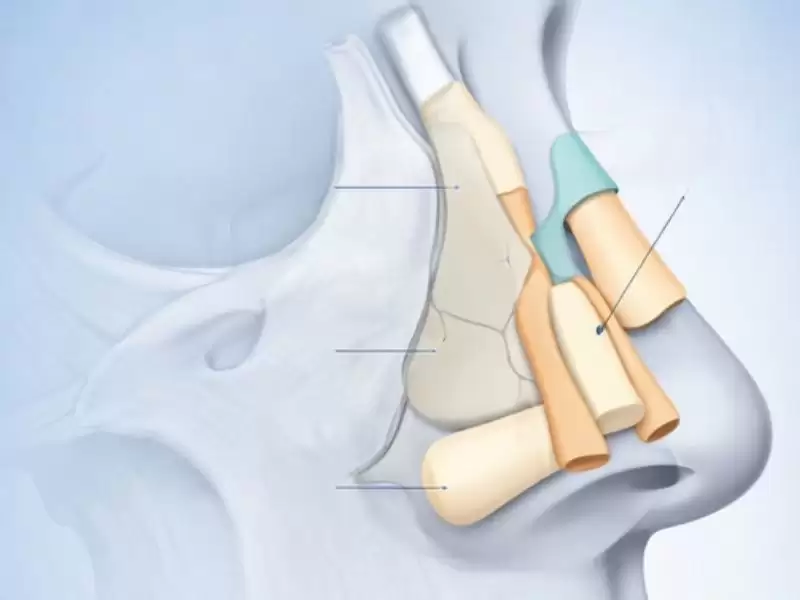
In patients who have undergone more than one nose surgery, the cartilage reserve inside the nose may decrease.
In this case:
- Loss of support at the nasal tip
- Collapse on the nasal bridge
- Deviation
- Asymmetry
- A larger volume of cartilage tissue may be needed to correct structural problems such as collapsed sidewall (alar collapse).
Rib cartilage:
- May be flexible
- May provide a durable structure
- Has a high capacity to maintain its shape over time
- May provide a larger volume
Therefore, it becomes one of the important options in revision surgery.
- Why Is Rib Cartilage Used In Revision Rhinoplasty?
- Is It Dangerous To Harvest Cartilage From The Rib?
- Is There Pain When Harvesting Cartilage From The Rib?
- Key Points Considered In Rib Cartilage Harvesting
- Is Rib Cartilage Mandatory For Every Patient In Revision Rhinoplasty?
- Will There Be A Scar In The Area Where Rib Cartilage Is Harvested?
- Does Rib Cartilage Increase The Success Of Revision Surgery?
- Frequently Asked Questions About Harvesting Rib Cartilage In Revision Rhinoplasty
Is It Dangerous To Harvest Cartilage From The Rib?
When performed with the right techniques and under sterile operating room conditions, it is a procedure consistent with general surgical principles.
Possible risks include:
- Pain at the harvest site
- Rare infection
- A very low likelihood of a sensation of collapse
- Bending at the cartilage edges (warping)
These risks can be reduced with appropriate surgical techniques. As with any surgical procedure, there are certain risks.

Is There Pain When Harvesting Cartilage From The Rib?
Since general anesthesia is administered during surgery, no pain is felt.
After surgery:
- There may be tenderness for the first 2–3 days
- Pain can usually be managed with painkillers
- Short walks can be started in a short time
- The area largely becomes comfortable within 1–2 weeks
Patients often describe the pain in this area as “manageable.”
Key Points Considered In Rib Cartilage Harvesting
Specialist surgeons, during the procedure:
- Try to keep the incision as small as possible
- Determine the amount to be harvested according to the patient’s needs
- Preserve the integrity of the chest wall
- Apply aesthetic suturing
- Use techniques that reduce the risk of complications
take care to do so.
This section is for general informational purposes.

Is Rib Cartilage Mandatory For Every Patient In Revision Rhinoplasty?
No, rib cartilage is not required for every patient.
Alternative sources:
- Septal cartilage (if available)
- Ear cartilage (for small supports)
- Existing intranasal tissues
Rib cartilage is generally one of the options preferred in major deformities or advanced revisions with severe loss of support.
Will There Be A Scar In The Area Where Rib Cartilage Is Harvested?
The incision is usually 2–3 cm and is hidden in a natural fold such as the inframammary crease. Its visibility may decrease over time.
Does Rib Cartilage Increase The Success Of Revision Surgery?
It can be used to strengthen nasal support in patients with insufficient cartilage volume and:
- May contribute to reducing the risk of nasal tip drooping
- May help correct collapse in the bridge area
- May support the resolution of functional problems
Results may vary individually in each patient.
Frequently Asked Questions About Harvesting Rib Cartilage In Revision Rhinoplasty
Cartilage from the chest wall is not a structure that directly determines breathing function. Therefore, it generally does not affect breathing.
Will removing rib cartilage cause breathing problems?
Yasal Uyarı:
Her cerrahi veya girişimsel işlemde sonuçlar kişiden kişiye değişiklik gösterebilir. İşlem öncesinde hekiminizden detaylı görüş almanız önerilir.