

Risk of Complications at the Rib Cartilage Harvest Site
Rib cartilage harvesting may be necessary in some patients during rhinoplasty and revision rhinoplasty procedures. This article is for infor...
Advanced revision rhinoplasty is a surgical procedure performed to correct structural or aesthetic problems that arise after previous nose reshaping surgeries. After the first operation, some patients may experience loss of support in the nasal structure, contour irregularities, or breathing-related problems. In such cases, the nasal anatomy may need to be reevaluated and the necessary surgical corrections may need to be performed.
Revision nose surgeries generally require more complex planning than primary rhinoplasty procedures. In previous operations, part of the nasal cartilage may have been removed, or weakening may have occurred in the nasal framework. For this reason, reshaping and reinforcing the nasal structure is an important stage in advanced revision rhinoplasty surgeries.
One of the methods used in this process is cartilage grafting. Cartilage grafts can be obtained from the patient’s own tissues and used in the areas of the nose that need support. This technique is among the surgical approaches that help reconstruct the nasal anatomy in revision rhinoplasty planning.
In revision rhinoplasty surgeries, it is important to reevaluate the nasal structure and accurately identify the causes of the existing problems. In previous operations, part of the nasal cartilage may have been removed, or the nasal support structures may have weakened. This may lead to problems such as contour irregularities, drooping of the nasal tip, or collapse of the nasal bridge. Therefore, reinforcing the nasal structure becomes an important stage when planning advanced revision rhinoplasty.
The use of cartilage grafts may be applied in revision nose surgeries to strengthen the nasal framework and help the nose achieve a more balanced form. The cartilage used as a graft may be used to support the nasal bridge, shape the nasal tip, or recreate the structural balance inside the nose. In this way, the goal is both to achieve a more regular nasal appearance and to preserve nasal function.
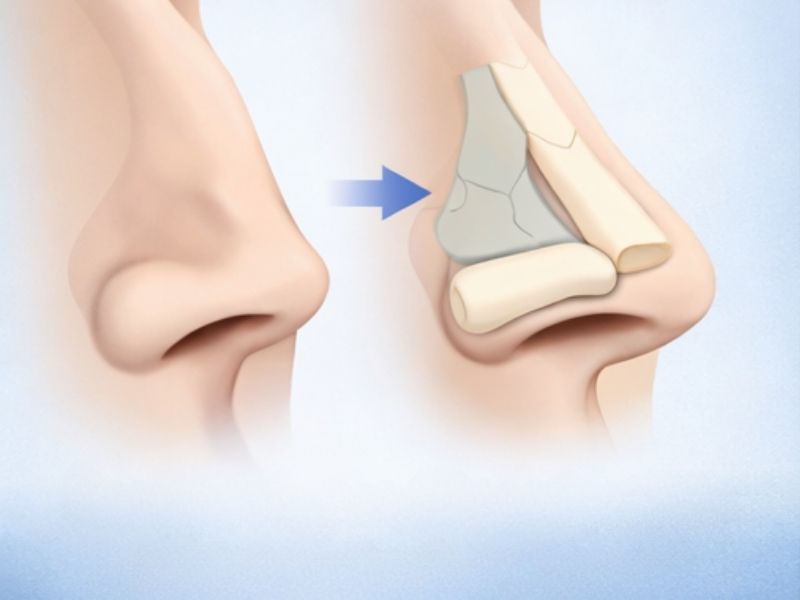
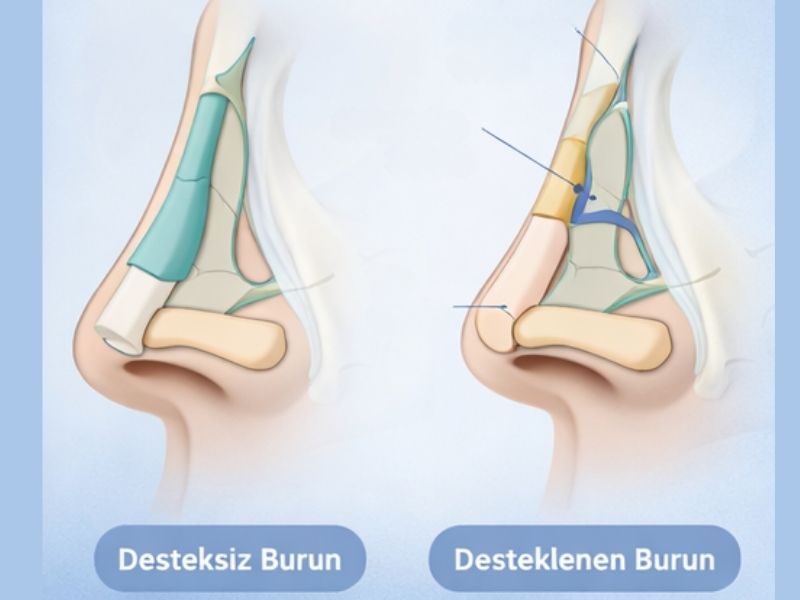
In revision nose surgeries, adequate support of the nasal framework is important for both aesthetic appearance and nasal function. Weakening of the nasal support structures in previous surgeries may cause issues such as collapse of the nasal bridge or drooping of the nasal tip. Such problems may lead to changes in the nasal shape over time.
Cartilage grafts are surgical tissues used to restore support to the nasal structure. These grafts may be placed on the nasal bridge, the nasal tip, or the internal support points of the nose to help strengthen the nasal framework. In this way, the nasal structure may become more stable and the long-term preservation of the surgical result may be supported.
One of the major problems encountered in advanced revision rhinoplasty surgeries is the loss of support caused by cartilage tissues that were removed or damaged in previous procedures. In some primary nose reshaping surgeries, part of the cartilage may be removed to shape the nasal bridge or nasal tip. However, over time, the absence of these tissues may lead to weakening of the nasal structure and contour deformities.
The use of cartilage grafts in revision nose surgeries may help recreate this lost structural support. Grafts obtained from the patient’s own cartilage tissue may be placed in the necessary areas of the nasal structure to support reconstruction of the nasal framework. This approach may contribute to correcting irregularities on the nasal bridge and bringing the nasal tip into a more balanced position.
Cartilage grafts may also help make the nasal structure more durable. Thanks to this technique used in revision rhinoplasty surgeries, reshaping the nasal structure becomes possible again. This may contribute both to a more balanced nasal appearance and to the long-term preservation of the nasal structure.
In advanced revision rhinoplasty surgeries, the use of cartilage grafts may be planned to correct structural or aesthetic problems that occur in the nasal structure. After previous nose reshaping surgeries, some patients may experience weakening of the nasal framework, contour irregularities, or changes in nasal function. In such cases, cartilage grafts may be used to restore support to the nasal structure and create a more balanced framework.
When planning revision nose surgery, the condition of the existing cartilage tissue in the nose is carefully evaluated. In previous surgeries, part of the nasal cartilage may have been removed, or the nasal support structures may have weakened over time. Therefore, cartilage grafting may be preferred in advanced revision rhinoplasty surgeries to strengthen the nasal framework again and correct contour deformities.
Cartilage grafts may help correct problems such as collapse of the nasal bridge, loss of support at the nasal tip, or asymmetry in the nasal structure. At the same time, they may also help restore structural balance inside the nose and support breathing function. For this reason, the use of grafts in revision rhinoplasty surgeries is considered one of the important stages of surgical planning.
In some patients, collapse or irregularities of the nasal bridge may occur after previous nose reshaping surgeries. This is generally related to insufficient support of the cartilage and bone structures in the nasal bridge. Excessive tissue removal in particular may cause the nasal bridge to weaken over time.
The use of cartilage grafts in revision rhinoplasty may help support the nasal bridge again. Grafts are placed on the nasal bridge with the aim of helping the nasal structure achieve a more balanced appearance. In this way, collapse or irregularities of the nasal bridge may be corrected and the nasal structure may become more stable.
The nasal tip is one of the areas that requires the greatest structural support in rhinoplasty surgeries. Weakening or removal of the nasal tip cartilages in previous surgeries may lead over time to drooping of the nasal tip and contour irregularities. This may affect both the appearance of the nose and the stability of the nasal tip.
In advanced revision rhinoplasty, cartilage grafts may be used to support the nasal tip again and improve its shape. Grafts may be placed to give projection to the nasal tip, correct symmetry, and create a more stable structure in the long term.
Some situations in which cartilage graft use may be preferred include:
In advanced revision rhinoplasty surgeries, different types of cartilage grafts may be used to restore support to the nasal structure and correct contour deformities. The type of graft to be used is determined according to the degree of deformity in the nose, the amount of support needed, and the patient’s existing cartilage tissue.
The most commonly used cartilage graft sources in revision nose surgeries are:
Each type of graft differs in durability and ease of shaping. For this reason, the surgeon determines the most suitable cartilage source according to the needs of the nasal structure and creates the surgical plan accordingly.
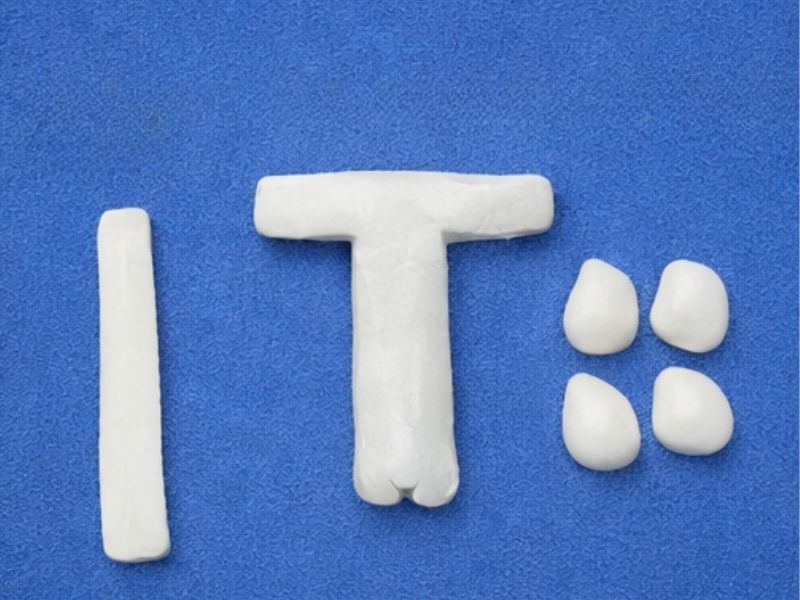
The source of the cartilage graft to be used in revision rhinoplasty surgeries is determined according to the needs of the nasal structure. Since septal, ear, and rib cartilage have different characteristics, each may be preferred in different situations. When making a graft selection, factors such as durability, ease of shaping, and the amount of support needed are evaluated.
In general, the characteristics of cartilage grafts may be summarized as follows:
Septal cartilage: Thanks to its straight and firm structure, it is the first preferred graft source in many rhinoplasty surgeries.
Ear cartilage: It has a more flexible structure and may be used especially in the nasal tip area.
Rib cartilage: It may be preferred in advanced revision rhinoplasty cases that require a larger and stronger graft.
The selection of these grafts is planned according to the degree of deformity in the nasal structure and the goals of the surgery. In this way, the aim is to reconstruct the nasal structure in a more balanced way both aesthetically and functionally.
In advanced revision rhinoplasty surgeries, cartilage grafts may be placed in different areas according to the needs of the nasal structure. The aim is to support the nasal framework, correct contour irregularities, and make the nasal structure more stable. The area where the grafts will be placed and the technique to be used are determined according to the type of deformity in the nose.
Thanks to these techniques, both the aesthetic appearance and the structural balance of the nose may be recreated. Correct positioning of the grafts is an important factor for the long-term success of revision rhinoplasty surgery.
After revision rhinoplasty surgery, the cartilage grafts placed in the nose require a certain healing period to adapt to the nasal structure. During the first weeks after surgery, swelling and tenderness in the nasal area are generally considered normal. As the swelling decreases over time, the nasal structure begins to appear more clearly.
Cartilage grafts integrate with the surrounding tissues in the area where they are placed and become a part of the nasal structure. This process gradually progresses over several months. In revision rhinoplasty surgeries, the healing process may take longer in some patients compared to primary surgeries. The reason for this is that the nasal tissues have already undergone surgical intervention before.
For the healing process to progress properly, it is important for patients to follow their doctor’s recommendations during the postoperative period. Especially in the first weeks, protecting the nasal area and avoiding trauma may support recovery.
After revision rhinoplasty surgery, attention is generally recommended for the following points:
Over time, as the grafts adapt to the nasal structure and the swelling decreases, the shape of the nose becomes clearer. In this way, the aesthetic and structural results of advanced revision rhinoplasty surgery can be seen more clearly.
Advanced revision rhinoplasty surgeries are more comprehensive surgical procedures aimed at correcting structural and aesthetic problems that arise after previous nose reshaping operations. In these surgeries, restoring support to the nasal framework and shaping the nasal structure in a balanced way are important stages.
The use of cartilage grafts is one of the main surgical methods that helps strengthen the nasal structure in revision rhinoplasty surgeries. Grafts obtained from the septum, ear, or rib cartilage may be used to support the nasal bridge, shape the nasal tip, and make the nasal structure more stable.
With properly planned cartilage graft applications, the loss of support in the nose structure may be corrected and a more balanced nasal form may be created. At the same time, preserving the structural balance inside the nose may also contribute to supporting breathing function. For this reason, the use of cartilage grafts in advanced revision rhinoplasty surgeries holds an important place both aesthetically and functionally.
How long should one wait before revision rhinoplasty?
It is generally recommended to wait a certain period after the first nose surgery for the tissues to heal completely. In most patients, this period may be around one year.
Is a cartilage graft necessary for every patient in revision rhinoplasty?
A cartilage graft is not required for every patient. The use of a graft is planned according to the need for support in the nasal structure and the structural condition left by the previous surgery.
Which cartilage graft is most commonly used in revision rhinoplasty?
In most patients, the first choice is septal cartilage from inside the nose. However, when there is not enough cartilage available, ear or rib cartilage may also be used.
In which situations is rib cartilage preferred?
Rib cartilage may be preferred when there is a serious need for structural support in the nose or when there is not enough cartilage available in the nose.
How long does revision rhinoplasty surgery take?
The duration of the surgery may vary depending on the extent of the procedures to be performed. Revision rhinoplasty can generally take longer than primary rhinoplasty surgeries.
How long does swelling last after revision rhinoplasty?
Noticeable swelling may be seen in the first weeks after surgery. Over time, the swelling decreases and the shape of the nose becomes clearer within a few months.
Are the results of revision rhinoplasty permanent?
When the surgery is properly planned and adequate structural support is provided, the goal is for the results to be preserved for a long time.
Can the nose become deformed again after revision rhinoplasty?
If the nasal structure is adequately supported and the surgical planning is done correctly, the aim is to preserve the form of the nose.
Can revision rhinoplasty correct breathing problems?
In some patients, structural problems inside the nose may also be corrected during revision rhinoplasty surgery, which can help support breathing function.
Who may be a suitable candidate for revision rhinoplasty?
Revision rhinoplasty may be considered for people who have previously undergone nose surgery and are experiencing problems related to the appearance or function of the nose.
Yasal Uyarı:
Her cerrahi veya girişimsel işlemde sonuçlar kişiden kişiye değişiklik gösterebilir. İşlem öncesinde hekiminizden detaylı görüş almanız önerilir.
Rib cartilage harvesting may be necessary in some patients during rhinoplasty and revision rhinoplasty procedures. This article is for infor...

Revision rhinoplasty is a second corrective surgery performed in patients who have previously undergone rhinoplasty and are not satisfied wi...
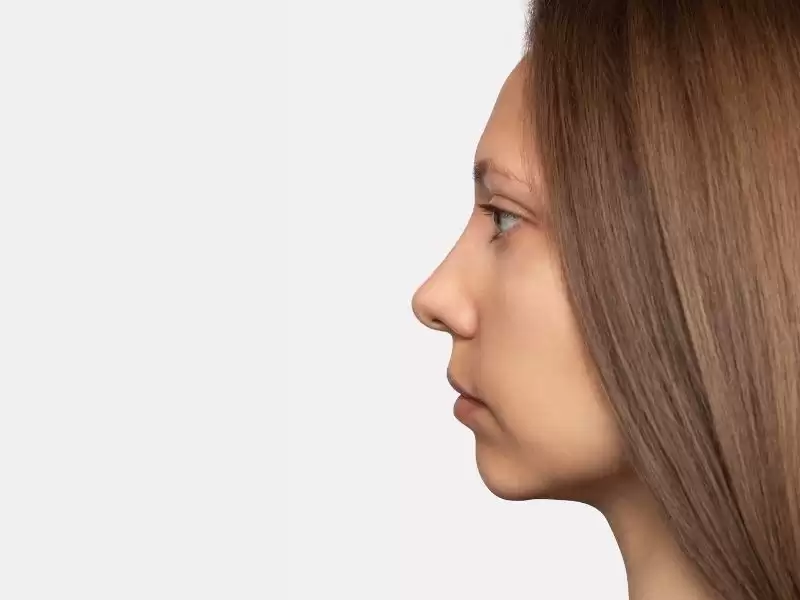
In revision rhinoplasty, choosing the cartilage source is an important step in surgical planning....