
A neck mass is a condition characterized by a palpable swelling, lump, nodule, or feeling of fullness in the neck. While some masses develop rapidly due to infections and then subside, others may persist for longer periods and require detailed evaluation. The duration, location, size, tenderness, and accompanying symptoms of a neck swelling are important in the diagnostic process.
- What Is a Neck Mass?
- What Symptoms Can Accompany a Neck Mass?
- What Causes a Neck Mass?
- Differences Between Potentially Benign Neck Masses and Those Requiring Further Evaluation
- Can Swollen Lymph Nodes Cause a Neck Mass?
- Can the Thyroid Gland Cause a Neck Mass?
- What Causes Neck Masses in Children?
- How Is a Neck Mass Diagnosed?
- How Is Treatment for a Neck Mass Planned?
- When Should a Neck Mass Be Taken Seriously?
- References
What Is a Neck Mass?
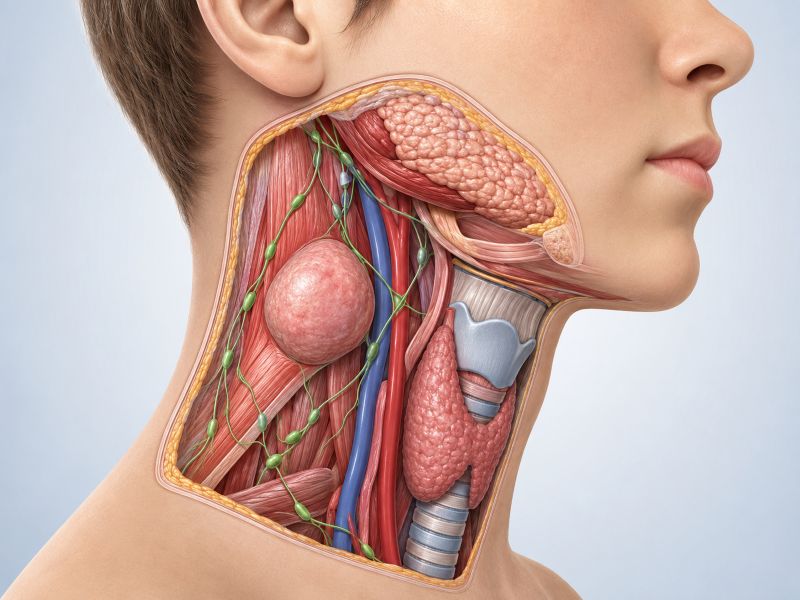
A neck mass may develop in connection with the lymph nodes, thyroid gland, salivary glands, subcutaneous tissues, vascular structures, or congenital remnants in the neck. A mass may appear on one or both sides of the neck. Some masses are painful and tender, while others are noticed as painless, firm swellings.
Because the neck contains different structures, including lymph nodes, the thyroid gland, salivary glands, and subcutaneous tissues, not every mass has the same underlying cause. Therefore, evaluation should consider not only the presence of a palpable lump but also how long it has been present, whether it is growing, its relationship with infections, and the patient's overall health findings.
What Symptoms Can Accompany a Neck Mass?
Neck swelling is often noticed when a person looks in the mirror or examines their neck. In some cases, a mass that moves during swallowing, a lump beneath the jaw, swelling behind the ear, or a firm area along the side of the neck may be observed.
A neck mass may be accompanied by a sore throat, fever, fatigue, runny nose, dental infection, ear pain, voice changes, difficulty swallowing, or night sweats. Painful masses may be more commonly associated with infections; however, the presence or absence of pain alone is not sufficient to determine the cause.
What Causes a Neck Mass?
There is a wide range of causes of neck masses. One of the most common is enlarged lymph nodes. Infections involving the throat, tonsils, teeth, skin, or areas around the ears may cause the lymph nodes in the neck to enlarge.
Other possible causes include thyroid nodules, salivary gland diseases, congenital cysts, lipomas, subcutaneous masses, swelling following trauma, and certain less common conditions. An ENT evaluation becomes particularly important if the mass persists, continues to grow, or feels unusually firm.
Differences Between Potentially Benign Neck Masses and Those Requiring Further Evaluation
Not every neck mass indicates a serious disease. However, certain characteristics may require more detailed evaluation.
| Feature | Potentially Benign Masses | Masses Requiring Further Evaluation |
|---|---|---|
| Duration | May decrease in size within a short period | May persist for weeks |
| Pain | May be painful when associated with infection | May be painless and firm |
| Mobility | May be more mobile | May feel fixed or hard |
| Accompanying Symptoms | Sore throat, fever, signs of infection | Weight loss, night sweats, voice changes |
| Evaluation | Monitoring and examination may be necessary | Detailed ENT evaluation may be necessary |
This distinction cannot be made definitively at home. The characteristics of the mass and the examination findings should be evaluated together.
Can Swollen Lymph Nodes Cause a Neck Mass?
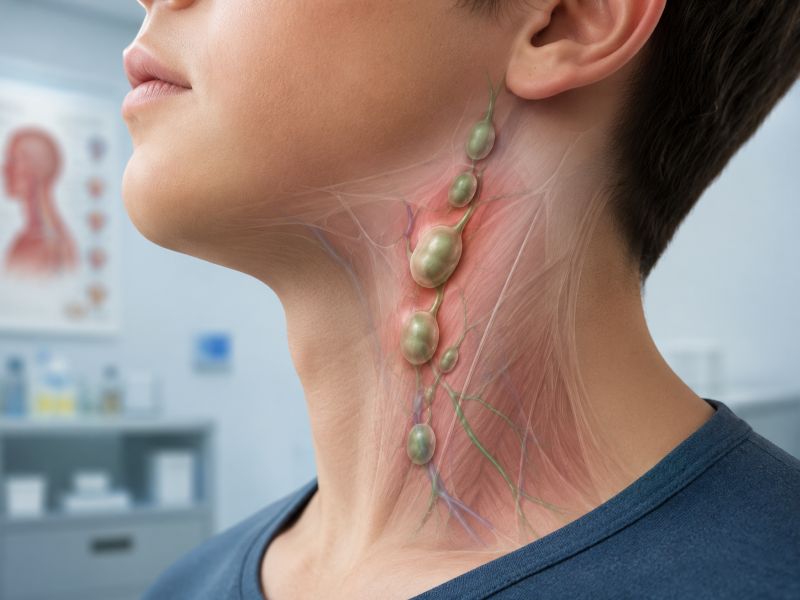
Yes, swollen lymph nodes in the neck may be noticed as a lump. Lymph nodes are part of the immune system and may enlarge during infections. A lump in the neck may develop particularly after throat infections, tonsillitis, dental problems, or skin infections.
Although enlarged lymph nodes are often associated with infections, lymph nodes that do not decrease in size over time, continue to grow, become hard, or feel fixed should be evaluated. Medical examination should not be delayed if accompanying symptoms such as fever, night sweats, weight loss, or unexplained fatigue are present.
Can the Thyroid Gland Cause a Neck Mass?
Because the thyroid gland is located at the front of the neck, thyroid-related conditions may be noticed as nodules, swelling, or a feeling of fullness. A thyroid nodule may appear as a swelling that moves during swallowing or as a palpable mass at the front of the neck.
Thyroid nodules do not always cause symptoms. Some patients may experience a sensation of pressure when swallowing, fullness in the neck, voice changes, or discomfort when breathing. For thyroid-related masses, a physical examination, neck ultrasound, and, when necessary, blood tests or further investigations may be planned.
What Causes Neck Masses in Children?
Neck masses in children are often associated with enlarged lymph nodes following infections. Swelling in the form of a lump may be noticed in the neck after infections of the upper respiratory tract, tonsils, teeth, skin, or areas around the ears.
Congenital cysts may also cause neck masses in children. Swelling along the midline, beneath the jaw, or on the side of the neck should be evaluated according to the child's age, infection history, and examination findings. Medical evaluation is necessary if the mass persists, grows, or is accompanied by symptoms such as pain, redness, or fever.
How Is a Neck Mass Diagnosed?
An ENT evaluation helps determine where a neck mass originates and which anatomical structures may be involved. During the examination, the location, size, consistency, mobility, tenderness, and relationship of the mass with surrounding tissues are assessed.
The physician reviews the patient's history of infections, smoking, dental problems, voice changes, difficulty swallowing, weight loss, night sweats, and how long the mass has been present. When necessary, further investigations such as neck ultrasound, blood tests, endoscopic ENT examination, imaging studies, or needle biopsy may be planned.
How Is Treatment for a Neck Mass Planned?
Treatment for a neck mass is determined by its underlying cause. In cases of infection-related lymph node enlargement, evaluation and monitoring of the underlying infection may be necessary. If allergies, dental infections, tonsil problems, or skin infections are present, treatment is planned according to the cause.
If a thyroid nodule, salivary gland disease, congenital cyst, or another type of mass is identified, the treatment plan is developed according to examination and test results. While monitoring alone may be sufficient for some masses, other cases may require medication, an interventional procedure, or surgical evaluation.

When Should a Neck Mass Be Taken Seriously?
Persistent neck swelling should be evaluated, especially if it lasts longer than 2–3 weeks or continues to grow. Earlier evaluation may be necessary if a painless, hard, and immobile mass is accompanied by hoarseness, difficulty swallowing, unexplained weight loss, night sweats, bloody sputum, or persistent throat complaints.
A neck mass may often result from benign or infection-related causes. However, identifying the underlying condition is important when swelling persists. This content is intended for general informational purposes and does not replace diagnosis or treatment planning. The appropriate approach to a neck mass should be determined following a medical examination and physician evaluation.
Related Articles:
References
- Pynnonen MA, et al. Clinical Practice Guideline: Evaluation of the Neck Mass in Adults. Otolaryngol Head Neck Surg. 2017;157(2_suppl):S1–S30. (American Academy of Otolaryngology–Head and Neck Surgery Foundation)
Yasal Uyarı:
Her cerrahi veya girişimsel işlemde sonuçlar kişiden kişiye değişiklik gösterebilir. İşlem öncesinde hekiminizden detaylı görüş almanız önerilir.