
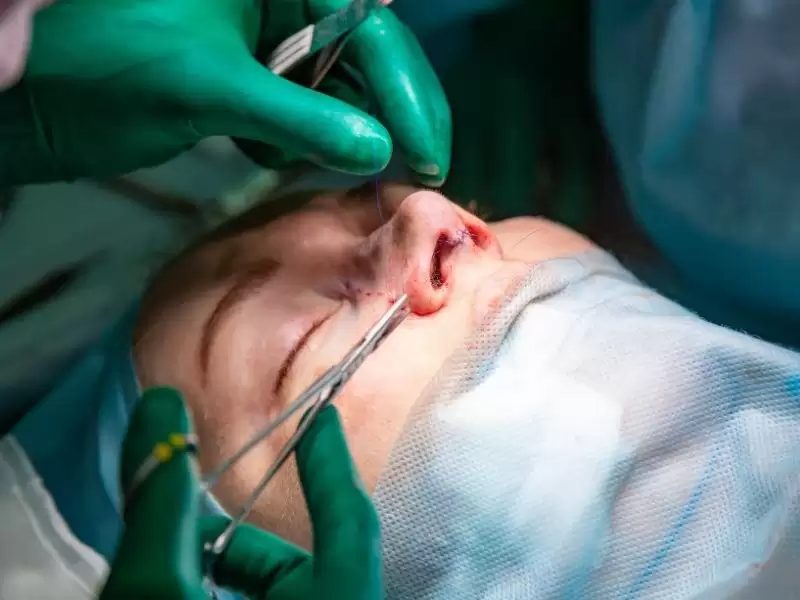
Grafts Used in Revision Rhinoplasty
Why Are Grafts Needed in Revision Rhinoplasty? Which Cartilage Sources Are Used? Rib Cartilage Use, Ear Cartilage Use...
Revision rhinoplasty is one of the surgical procedures planned for patients who have previously undergone nose surgery and require reassessment in terms of nasal shape, breathing function, or nasal support structures.
Scar tissue from the first surgery, reduced cartilage support, skin structure, and anatomical changes may require revision nose surgery to be evaluated with a more detailed and personalized surgical plan.
Therefore, when choosing a physician, not only aesthetic expectations but also the area of specialization, functional evaluation approach, preoperative assessment process, and postoperative follow-up plan should be considered together.
Revision rhinoplasty is one of the surgical procedures in which functional nasal structures are evaluated together with aesthetic appearance. Therefore, the relevant area of specialization and experience in nasal surgery assessment may be considered during the physician selection process.
The following points may be evaluated when choosing a physician:
Revision nose surgery may require a more detailed process than primary rhinoplasty because it is planned on nasal tissues that have previously undergone surgery. Therefore, the physician’s approach to revision cases and surgical planning method should be evaluated.
The following points may be considered in this process:
These points may help the surgical decision to be planned in a more personalized and structured way.

Each patient’s nasal structure, skin thickness, cartilage support, and tissue characteristics remaining from previous surgery are different. Therefore, revision rhinoplasty planning should not be based on a standard method but should be shaped according to the patient’s current nasal anatomy.
The following questions may be important during physician evaluation:
These factors are important for evaluating both aesthetic appearance and breathing function together.
In revision rhinoplasty, some patients may need an additional cartilage source to rebuild nasal support. The source to be used should be determined according to the patient’s previous surgery history, existing cartilage reserve, and surgical need.
The following points may be evaluated in this process:
Cartilage source selection should be planned individually after examination and physician evaluation.

Preoperative evaluation before revision rhinoplasty should include the assessment of internal nasal structures and breathing function as well as the external appearance of the nose. In this process, the patient’s expectations, previous surgery history, and current complaints are evaluated together.
The evaluation process may include the following points:
Photo analysis and simulation may help understand expectations and evaluate facial proportions during the revision nose aesthetics process. However, simulation does not guarantee a definite result and does not replace the final surgical plan.
This evaluation may support surgical planning when considered together with an in-person examination.
It is important for the patient to have realistic expectations during the revision rhinoplasty process. When choosing a physician, clear explanation of possible risks, limitations, and the healing process should be considered.
The following points may be evaluated in this process:
Revision rhinoplasty is a surgical process with outcomes that may vary from person to person. Therefore, patient expectations and medical suitability should be evaluated together before making a decision.
Follow-up after revision rhinoplasty is important for regular evaluation of the healing process. Swelling, internal nasal airway, nasal tip support, and tissue healing may be monitored during the control process.
The following points may be addressed during the postoperative period:
This content is intended for general informational purposes only. It does not replace diagnosis, treatment planning, or personalized surgical evaluation. Suitability for revision rhinoplasty should be determined after examination and physician assessment.
Yasal Uyarı:
Her cerrahi veya girişimsel işlemde sonuçlar kişiden kişiye değişiklik gösterebilir. İşlem öncesinde hekiminizden detaylı görüş almanız önerilir.
Why Are Grafts Needed in Revision Rhinoplasty? Which Cartilage Sources Are Used? Rib Cartilage Use, Ear Cartilage Use...

A second rhinoplasty is a more delicate process surgically compared to the first surgery. Therefore, the surgeon's experience, the technique...